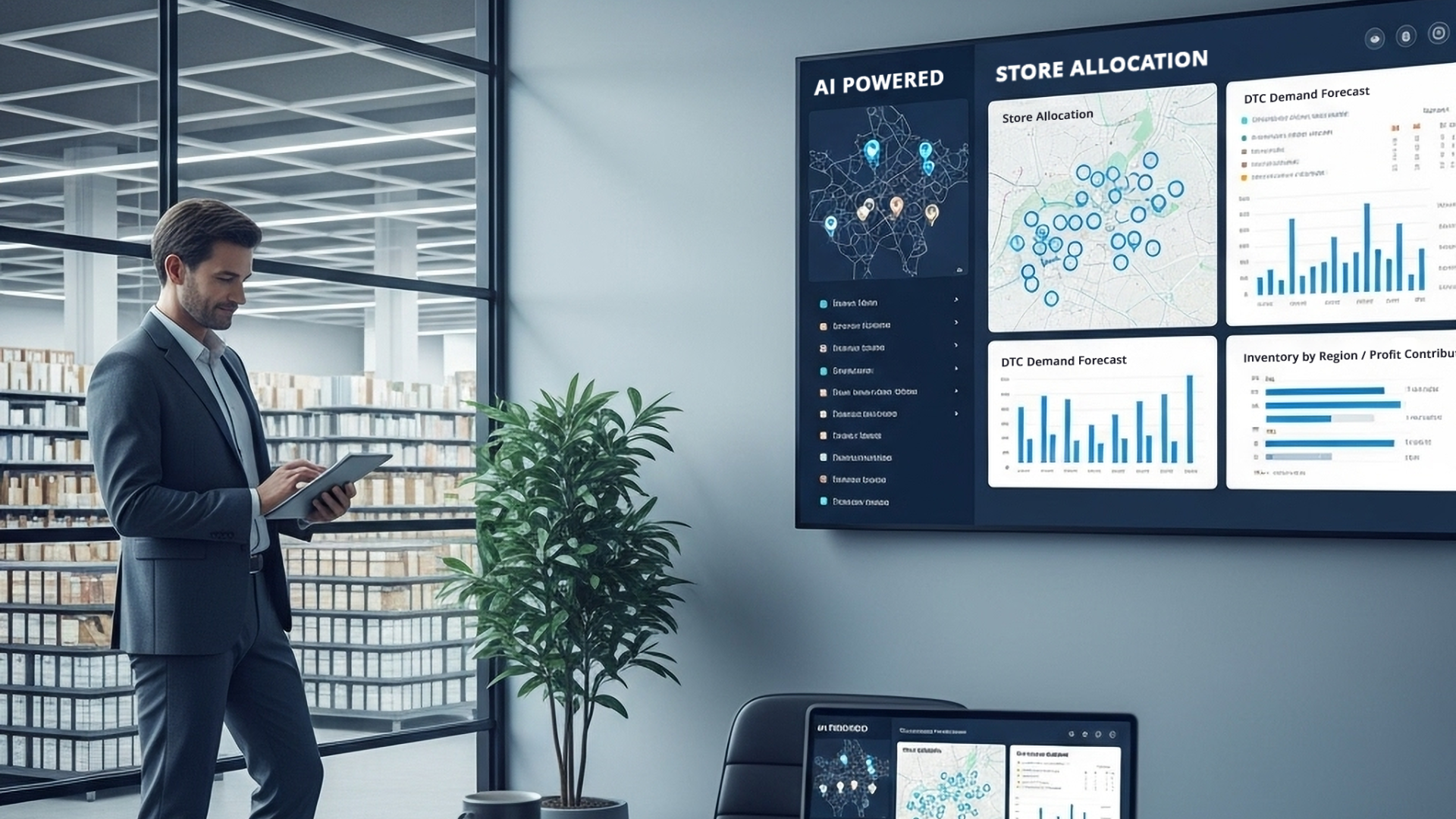
The Art & Science of Retail Merchandising

AI is a tool, not a replacement. For the merchandising world, it is a science meant to enhance the art of brand vision and retail expertise. AI enables speed, scale and structure but it’s the human element that brings meaning to those insights. It’s the planner, the designer, the strategist who recognizes emerging trends—who considers vision, context and creativity. So let’s reframe the conversation: AI doesn’t replace planners. It enables them. The future belongs to those who are ready to use it.

Mastering the Art of Retail Merchandising: Where Strategy Meets Storytelling

Merchandising is more than product placement, it’s the art of telling a story that converts browsers into buyers and buyers into believers. It’s how brands connect with customers, influence decisions and ultimately drive revenue. 

Knowing what products your customers want (even before they do) is an art form; it’s about instinct and insight—a skill refined over time much like mastering color theory. Placing the finishing touches to a masterpiece, having the right style, color, size in the right place at the right time is akin to shading and highlighting. It’s the strategic positioning of products, the timing of launches, the use of color and texture to bring the big picture to life. 

Merchandising isn’t just about moving products. It’s about crafting experiences. And like all great art, it’s both intentional and intuitive.

Automating the Science with an AI-Powered Merchandising System

The science behind merchandising is the data-backed analysis that guides decisions and provides details around your latest sales trends—all to say: Where’s the demand?

Is butter yellow still the color of the summer? How is ozempic impacting size profiles? Are skinny jeans back (with a vengeance)? What’s the lore around the latest -core: mermaidcore, balletcore, cottagecore?

AI comes in to enhance the art by analyzing data at scale, at a granular level, and improving operational efficiencies through automation.

With an AI-powered system catering to merchandising challenges, retailers are able to streamline data analysis, improve forecasting accuracy, minimize inventory risk and sharpen planning processes. AI systems digest massive amounts of data quickly and surface insights for an educated decision; it becomes a force multiplier for merchandising teams to make decisions that align with consumer preferences and drive profitability.

Retail Reimagined: Balancing Passion and Precision

The real power comes when AI and people work together. At its core, merchandising blends creativity with data. People provide intuition, direction and inspiration. AI aligns teams, breaks down patterns and identifies opportunities/risks.

A demand-led, data-backed approach enables businesses to stay agile, plan with confidence and protect their margins. With AI-powered retail planning software, retailers can seamlessly balance analytics with merchant intuition to deliver the right product mix—down to style, color, size.

To learn more about how your team can use AI to enhance the art of merchandising, email us at info@7thonline.com or book a demo with our team.

Embed AI Across Multi-Channel Retail Processes, Not Just in Forecasting

It’s no secret that artificial intelligence has changed the world, but the full power of what this technology can do has yet to be discovered—especially in the retail space. Many retail tech solutions are serving the industry with AI-powered demand forecasting and personalization capabilities, but true impact and ROI comes from embedding AI throughout the merchandising cycle, across channels. 

According to NVIDIA’s report on the State of AI in Retail and CPG in 2025, 42% of retail firms are actively using AI in their operations, while 47% are still in the assessment phase. However, only a little over half of those using the technology are using it for more than six use cases stretching across their operations. 

For retailers that aren’t using AI across their workflow, forecasting tends to be the one place where they are using it. A recent 7thonline survey of 100+ retail executives revealed that 33% of leaders are currently using AI to analyze data and forecast demand. Of course, forecasting is a critical piece of the retail puzzle, especially as demand fluctuates and expectations rise, but it’s not the only piece. AI should also be embedded in inventory management, supply chain management, merchandising and planning, in-season open-to-buy, sentiment analysis and more.

Why AI Is Needed in Every Part of Multi-Channel Processes

While AI has many benefits, the true value of AI in retail comes from its ability to boost profitability and preserve margins through proactive, data-driven decisions. NVIDIA reported four out of five retailers using AI claim it has boosted their annual revenue, with 25% stating revenue increased by more than 20%. Success isn’t achieved by simply adding AI to a tool and hoping for results, it’s achieved by embedding it into every stage of the retail workflow.

Retailers using AI for forecasting have seen impactful benefits, but without end-to-end integration, its full potential remains untapped; forecasting is only the first step to AI adoption in retail. 7thonline’s latest survey revealed that while only 16% of those utilizing AI are using it for demand forecasting, 34% of retail leaders expect AI to play a major role in sustaining or growing profits within the next two years.

Here Are Some Ways to Embed AI into Different Steps of the Retail Process

AI for Supply Chain Management –

AI helps retailers navigate the complexities of global trade in response to tariffs, sanctions and other disruptions affecting various parts of the supply chain to better align production decisions and shopper demand. Utilizing AI-driven insights, such as “what if” scenarios, retailers are able to determine what might happen if they need to switch suppliers or where they get their products from.

AI Solutions in Inventory Management –

Pre and in-season inventory management is one of the most common AI use cases in retail, according to NVIDIA; retailers can stay ahead of the game with decisions that maximize inventory productivity and enhance customer satisfaction. Using AI, they can create detailed item-level plans across channels, make dynamic open-to-buy decisions and allocate based on localized demand for each store. Utilizing AI and real-time sales data, retailers are able to determine each item’s propensity to sell at different locations and predict when products will sell out during the season—enabling proactive reorder decisions to maintain the right assortment mix down to style, color, size. Deep demand insights empower data-driven decisions based on the latest selling trends, such as when to replenish stock, reorder best sellers or develop a promotional plan for slow-moving items.

AI-Powered Demand Planning –

AI improves demand forecasting accuracy and identifies risks and opportunities with robust visibility into what resonates with consumers, reducing inventory risk and driving strategic growth. NVIDIA revealed analytics and insights into areas like sentiment are a common use case for AI in retail—helping retailers understand consumer behavior based on all customer affinities: product, time, location and media consumption. AI can crawl for customer reviews and social media posts to uncover product sentiment and marketing contribution margins, enabling retailers to adjust their merchandising and promotional strategies. By analyzing the performance of past products, AI can also make predictions about how well new styles might sell based on the demand of previous products with similar attributes for smart expansions into new markets and product categories.

Making the Most of AI in Retail

Many retailers who have dipped their proverbial toe into the water of AI have only scratched the surface of what it can do; until retailers embed AI into every step of their operational workflow, they won’t be able to reap the full benefits. With AI embedded into every aspect of their multi-channel processes, that’s when their business will truly soar. 

Read the full article in The AI Journal: https://aijourn.com/embed-ai-across-multi-channel-retail-processes-not-just-in-forecasting/

To learn more about how AI can help brands and retailers with their multi-channel processes, book a demo or email us at info@7thonline.com.

AI-Powered Multi-Channel Demand Planning to Streamline Holiday Shopping Season

Before you know it, the biggest time of year for retail will be here: Black Friday/Cyber Monday, aka holiday shopping. But between tariff policies, tight wallets and teetering loyalty, retailers this year will have to navigate more than just bold discounts and eye-catching campaigns to boost holiday sales—they need reliable multi-channel demand planning strategies. Brands planning smarter will prevail, and combining AI and brand identity will be key. 

Brand Loyalty vs. Bargain Hunting: What Wins Over Today’s Shoppers

According to the Wunderkind 2025 Tariffs Consumer Impact survey, 76% of Americans say they’re willing to switch brands for better prices—consumers are leaving loyalty behind for a 10-20% deal. This cost-conscious generation of shoppers puts concerned retailers in a sticky situation as prices increase and purchasing power diminishes with tariff policies, especially the 66% majority that cannot afford to absorb the extra import costs

June saw the first tariff-induced price hikes with goods seeing the highest cost increases in the past five months, with the Consumer Price Index increasing by 0.3%.

“Inflation has begun to show the first signs of tariff pass-through. While services inflation continues to moderate, the acceleration in tariff-exposed goods in June is likely the first of greater price pressures to come. The Fed will want to hold steady as it awaits more data.” – Ellen Zentner, Chief Economic Strategist at Morgan Stanley Wealth Management 

Between wavering brand loyalty and declining purchasing power, retailers are having to rethink demand for the holiday season. 

Enhance Retail Holiday Planning Ahead of the Frenzy

Get ahead of the Black Friday/Cyber Monday frenzy with thoughtful planning.

Holiday demand can be unpredictable, and with ongoing supply chain challenges, even top retailers can fall short with their inventory management—but the era of shopping showdowns is over. Gain a competitive edge with thoughtful planning and smart allocation that minimize inventory risk. 

For apparel and fashion brands, it’s not just about having enough product—it’s about having the right product, in the right sizes, at the right locations. Smart allocation is critical. Thoughtful planning is non-negotiable.

A misstep can lead to missed sales, frustrated customers and excess inventory where it’s not needed. This season, precision in distribution and mindful assortment planning aren’t just a nice-to-have—it’s necessary to meet shopper expectations and preserve your tariff-burdened margins. That’s where AI-powered solutions come in.

Multi-Channel Demand Planning: Combining AI and Brand Identity 

The uncertainty and continuously-changing conditions of today’s retail landscape are changing the way people are buying, especially for the holidays. With AI-powered retail planning software informing inventory decisions, retailers can seamlessly blend detailed analytics with merchant intuition and creativity to meet shopper expectations and demands—down to style, color, size.

Combining brand identity with AI enables retailers to deliver a more personalized and consistent shopping experience that aligns with customer expectations. By leveraging AI to analyze customer behavior, preferences and purchase history, brands can produce and stock products that reflect the brand’s aesthetic and align with their target audience. This fusion ensures that every interaction—whether online or in-store—feels authentic and tailored, reinforcing brand loyalty while increasing conversion through smarter, more intuitive product offerings across channels.

To learn more about how AI can help brands and retailers stay ahead of consumers during the busiest time of year in retail, book a demo or email us at info@7thonline.com.

From Vision to Execution: Max Ma on 7thonline’s Tech-Driven Retail Strategy

In today’s fast-changing retail landscape, precision and agility are more critical than ever. Max Ma, CEO and founder of 7thonline, sat with CityBIZ for a Q & A. Max shares how his vision for data-driven, SKU-level planning is helping brands move beyond outdated forecasting models to fully integrated, AI-powered merchandising strategies. From founding insights to 7thonline’s strategy, this conversation sheds light on what it takes to thrive in modern retail.

What inspired you to establish 7thonline in 1999, and how has the company’s mission evolved since its inception?

I started working in retail as a software engineer, and quickly realized that the industry needed more effective ways to boost inventory productivity. It was surprising to see multi-billion dollar companies with completely manual processes. I (specifically) saw an opportunity to use artificial intelligence to improve the inventory decision-making process. We embraced the challenge; breaking the cycle of low margins, limited resources and sub-optimal decision-making. Ultimately, we believe that AI will improve quality of life as there is a more efficient use of time, better results and cost efficiencies.

We’ve been developing our AI solutions for 25+ years through continuous R&D and client collaboration to specifically address industry needs. Early on, we introduced AI tools for wholesale buying and planning, partnering with major wholesalers like Liz Claiborne, Jones Apparel Group and Kellwood. Over time, we added a whole suite of demand planning capabilities to address direct-to-consumer retail needs, servicing brands with both DTC and wholesale channels to align supply and consumer demand, increase margins and reduce excess stock. 

Today, 7thonline remains committed to helping the retail industry, which still relies heavily on Excel, by offering AI capabilities that enhance profitability and elevate inventory productivity. We’re always developing new functionality, expanding our algorithms and utilizing advanced AI and machine learning to help streamline retail and wholesale processes.

7thonline leverages advanced analytics, machine learning and AI to enhance retail merchandising strategy. Could you elaborate on how these technologies enhance demand planning and inventory management for your clients?

Using cutting-edge technology such as advanced analytics, machine learning and AI, we’re enabling retailers to better understand their customers and meet their expectations—from analyzing demand drivers to adaptive forecasting, the system considers all consumer affinities for the most accurate forecasts. Our system architecture is based on various AI methodology, and has laid a powerful foundation to support retailers in their planning and inventory management needs. With the latest LLM capabilities, we are taking the platform to the next level.

These technologies enhance demand planning and inventory management by analyzing data such as historical sales—down to style, size, color and store per week—to predict demand and inform decisions; by being demand-driven, retailers can make inventory decisions based on a product’s propensity to sell. With increased tariffs, making the right inventory decisions is even more critical—the “wrong” decisions become more costly. By only importing goods necessary to fulfill demand, retailers can avoid the costs associated with excess inventory and preserve their margins. AI simply makes this process much easier. 

The retail sector faces challenges like seasonal demand fluctuations and supply chain disruptions. How does 7thonline’s platform address these issues to support retailers effectively?​

We understand that the retail industry is primarily focused on short lifecycle and seasonal products, and have taken the related challenges into consideration when building our AI-native platform. Using industry-specific algorithms to address industry-specific needs, our system helps retailers dynamically adjust their inventory strategies to shifting consumer demand.

For example, forecasting demand is hard, but forecasting demand for new seasonal items without a sales history is borderline impossible. 7thonline’s AI-based platform is able to address this gap in information by analyzing data from similar styles and their performance, to predict their future sales based on trends and granular insights. Because of the sheer volume of data—down to style, color, size, store location and weekly sales—this is extremely difficult without artificial intelligence. The system leverages a wide range of data sources such as POS data, shipment data, logistic and warehouse data and marketing data to analyze the demand signal from every single channel of distribution. 

Your solutions have been adopted by notable brands such as PVH, Patagonia, and Canada Goose. Can you share a success story that highlights the tangible benefits a client experienced after implementing 7thonline’s solutions?​

7thonline has been servicing the retail industry for over 25 years; we’ve had clients stay with us for decades because of the firsthand benefits they experience using the system.

For example, a multi-billion dollar wholesale client was dealing with growing supply chain costs and sought to improve its operational efficiency and production accuracy across 11 global brands. By using our AI-powered account planning system, they were able to expedite their production buy orders one week earlier than their competitors, resulting in a $1/garment cost reduction.

For another client, a major retailer operating 8,000+ stores, allocation was their main concern—they wanted to improve allocation productivity and reduce operational costs from imprecise allocation and replenishment processes. Using the AI-powered forecasting capabilities, they were able to improve inventory accuracy from 60% to 92%, efficiently aligning stock to consumer demand and reducing the reallocation efforts. 

Want to learn more about what 7thonline could unlock for your brand? Let’s run a concept study to determine your ROI. Email us at info@7thonline.com.

As the retail industry continues to evolve, what trends do you foresee, and how is 7thonline positioning itself to meet the future needs of retailers?​

Throughout the years, we’ve been fortunate to partner with leading global brands and retailers to conceptualize and develop new functionality that enhances our solutions based on industry needs. We’re constantly collaborating with clients to develop new tools that improve retail processes and inventory decisions as the industry’s needs evolve.

Recently, we’re seeing more and more retailers place an importance on data analytics and efficiency. The biggest tech trend: artificial intelligence. While brands are always searching for innovative tech, AI is what’s on everyone’s radar right now; we think that more brands will continue to adopt AI in order to stay competitive in a saturated market. We’re particularly excited by the AI boom as artificial intelligence is embedded into the core of our system, providing us with a new frontier to collaborate with innovative brands looking to adopt AI capabilities—we’ve been doing AI for the past 25+ years. 

Read more in CityBIZ: https://www.citybiz.co/article/721831/qa-with-max-ma-ceo-and-founder-at-7thonline/

To learn more about 7thonline’s capabilities, book a demo.

Prescriptive AI Is What Predictive Always Wanted to Be

The retail industry is all about timing and shopper expectations that never stop evolving. The ability to predict what might happen is no longer enough; retailers need to know what to do next. That’s where prescriptive AI enters the picture. Not just as a powerful tool, but as the strategic backbone of smart allocation and retail success.

Retailers that still rely on manual planning or predictive analytics alone are at risk of falling behind. While predictive AI can analyze past data to forecast trends, prescriptive AI goes further by recommending exactly what action to take to achieve optimal results. It’s the difference between saying, “We’re likely to run out of stock next week,” and “Ship 300 size mediums to Chicago by Thursday.” 

According to a recent survey of 100+ retail executives about their retail strategy by 7thonline, 33% of retail executives are currently using AI to analyze/forecast demand. The move from predictive AI to prescriptive AI is a game-changing shift. 

Why AI Matters in Retail: Prescriptive AI, Predictive AI, Agentic AI and Beyond

As artificial intelligence continues to develop, retailers are increasingly faced with the challenge, and the opportunity, to integrate AI into every step of their workflows in meaningful ways. But to truly unlock AI’s value, it’s important to understand the distinctions between different types of AI—in particular, prescriptive and predictive AI. Knowing how and when to apply each can make the difference between basic automation and transformative performance.

Today’s most visible AI applications often fall under the category of generative AI—think of ChatGPT writing a blog post or GitHub Copilot recommending code—these tools rely on large language models to generate output. They are not built to make decisions based on future possibilities. 

Predictive AI in Retail Leads to Smarter Forecasting, Limited Action

Predictive AI is built specifically to forecast what is likely to happen based on patterns identified in historical data. It’s one of the most widely adopted AI tools in retail, helping brands anticipate demand, understand customer behavior and plan seasonal strategies. From identifying best-selling products to forecasting supply needs, predictive AI informs planning, but stops short of driving execution.

Some of the benefits of predictive AI for retailers include:

  1. Risk Mitigation – By identifying potential risks and operational vulnerabilities early, predictive AI helps retailers take preemptive action, improving supply chain resilience and cost control.
  2. Optimized Resource Allocation – Forecasting demand more accurately helps retailers avoid overstocking or understocking, leading to better inventory balance and reduced carrying costs.
  3. Personalized Customer Experiences – Predictive models enable tailored marketing and merchandising based on customer behavior, increasing satisfaction and driving conversions.
  4. Improved Product Development – Insights into trends and customer needs help brands launch more relevant products, better manage SKUs and refine future collections.

The challenge? Predictive AI might tell a retailer that outerwear sales will spike in October, but it won’t advise how many coats to ship, where to ship them or what sizes and colors are most likely to sell in each region. That kind of tactical guidance requires something more powerful. 

Prescriptive AI: From Inventory Guesswork to Precision Execution

This is where prescriptive AI transforms retail strategy. Unlike predictive AI, prescriptive tools don’t just analyze trends, they recommend real-time, data-driven actions to achieve the best outcomes based on the brand’s needs and challenges. Prescriptive AI takes into account past sales, current stock levels, store performance and supply chain constraints to guide decisions at a granular level.

In inventory management, for example, prescriptive AI enables brands to dynamically allocate products across channels, optimize assortment mixes and make agile in-season decisions to preserve margins. It connects planning with execution, automatically and intelligently. Some of the benefits of prescriptive AI for retailers include:

  1. Optimized Operations – Prescriptive AI improves workflows by offering concrete recommendations for day-to-day tasks like allocation, replenishment and merchandising.
  2. Faster, More Confident Decision-Making – Retailers gain immediate, real-time insights that empower teams to act quickly and accurately in fast-changing market conditions.
  3. Increased Revenue and Margin – With improved sell-through, fewer markdowns and better alignment between supply and demand, prescriptive AI helps drive growth and reduce waste.
  4. Enhanced Customer Satisfaction – By ensuring the right product is in the right place at the right time, brands deliver better shopping experiences, driving loyalty and repeat purchases.
  5. Strategic Advantage – Prescriptive tools allow retailers to model scenarios, test responses and plan future strategies with more precision, giving them a significant edge in a crowded marketplace.

Prescriptive AI for Smarter Allocation and Fulfillment

Prescriptive AI is especially powerful when it comes to smart product allocation. Traditional allocation relies on rules and parameters including store size or historical averages. But retail today requires dynamic, demand-driven precision. With prescriptive AI, retailers can identify which stores need more of a specific SKU, which locations will underperform with certain products and when to shift inventory based on real-time sales velocity.

By automating complex planning decisions, prescriptive AI frees up teams to focus on strategy instead of spreadsheets—getting out of “Excel Hell”. Businesses see improved workflow efficiency, tighter supply chain coordination and more agility in responding to disruptions.

More importantly, prescriptive AI helps unify disconnected systems by bridging gaps between merchandising, planning, marketing and fulfillment. The result is a more synchronized, responsive retail organization.

Real-World Results: A $250M Fashion Brand Concept Case 

To understand the impact of prescriptive AI in real terms, 7thonline ran an ROI analysis for a $250 million brand exploring our wholesale planning and allocation solution.

In the first year, without changes in production, the brand saw a projected $1.9 million boost in revenue, driven purely by better product placement. Alongside SG&A cost reductions, this delivered a 161% ROI. By year two, the brand reached full implementation and benefit realization. By year five, the cumulative benefit grew to $7.3 million, while total cost of ownership dropped to less than half its original value, delivering nearly 8X return on investment.

Faster insights. Smarter actions. Better performance.

AI has revolutionized how retailers analyze data by making it faster, more accurate and more intuitive. With intelligent analytics, businesses can move from reacting to problems to anticipating and solving them proactively.

Predictive AI identifies patterns and forecasts future trends, helping retailers make informed decisions. Prescriptive AI goes a step further, using those insights to recommend the best actions to optimize outcomes. Both are powerful, but serve different purposes. Retailers that understand when to use each can turn data into strategic advantage including boosting efficiency, accuracy and performance across their operations.

Read in the AI Journal: https://aijourn.com/prescriptive-ai-is-what-predictive-ai-always-wanted-to-be/

To learn more about how prescriptive AI can help brands and retailers make faster, smarter decisions, book a demo or email us at info@7thonline.com.


Staying Ahead of Shoppers with AI that Aligns Supply and Demand

August 1st, 2025: Liberation Day part 2. With new tariff headlines (and rising consumer fears on what this means for their discretionary income), making smart production decisions that align supply with demand is imperative for retail brands to protect their margins. But between new rates and pushed implementation dates, uncertainty won’t subside until the ink dries. AI-powered supply chain forecasting software that integrates supply and demand data can empower retailers to plan ahead and make decisions that improve the bottom line.

Supply Side: Tariffs, Risks and Disruptions

10%. 20%. 30%. Tariff pricing is continuing to fluctuate and markets are reacting (albeit not as sharply as on the first Liberation Day). With varying degrees of diversification and globalization, brands will feel the effects of additional tariffs differently.

Regardless, most brands have begun implementing a variety of mitigation strategies including vendor negotiation and stockpiling products. According to a recent 7thonline survey, the most common move is likely to be price hikes—35% of retail leaders surveyed claimed price adjustments as their first response to new tariffs. Budget-friendly brands such as Shein and Temu have already increased their prices as they have lower margins than others. While others such as Gap and Urban Outfitters are choosing to absorb the additional costs, and are using this as an opportunity to obtain more market share. Some brands have opted for a wait-and-see approach, not allowing the headline-driven fears to falter their strategy.

Our survey revealed that over 20% of retail executives are not confident in their supply chain’s ability to manage disruptions, aiming to improve flexibility and resilience through infrastructure changes. The most common actions? Reducing overall inventory levels, diversifying suppliers and shifting to just-in-time inventory models. 

Demand Side: Capturing Trends in Consumer Behavior and Fears

Recent retail sales data revealed slower demand in the American market, with May seeing the biggest drop. However, economists think the worst is yet to come. Our survey revealed declining spending remains the top concern for this year with 39% of retailers already seeing lower demand in the past year. 

With a weak sentiment index, smarter assortment planning is critical to ensure each SKU earns its place on the shelf—especially as tariffs eat away at margins.

A demand-driven, data-informed approach empowers businesses to stay agile, plan accurately and protect margins. Assortment planning—part art, part science—not only anticipates relevant trends but also leverages data to analyze and forecast demand. With AI-powered retail planning software, retailers can seamlessly blend analytics with merchant intuition and creativity to engage shoppers and deliver what they truly want—down to style, color, size.

Getting the right products to shoppers, wherever and whenever they’re looking, is essential in ensuring shoppers keep shopping with your brand. Using AI, you can understand consumer behavior and maximize inventory productivity based on the item’s propensity to sell across channels.

Aligning Supply and Demand: Designer Changes Tailored to Shoppers

Business of Fashion states: Suppliers could start getting pickier about what products they’ll produce, and brands on what they’ll make, simplifying design components or opting only for higher margin products. Hardware store Home Depot, for example, warned it may stop selling some products if increased costs make them unprofitable to sell.

“We need to have certainty. Companies can’t make decisions on investment and shifting supply chains and so on with the rates constantly changing. And as it starts hitting demand it’s going to be really important for the economy that we get clarity on it so that supply and demand can normalize.”  — Aneesha Sherman, Bernstein US apparel and retail analyst. 

While the delayed go-to-effect date might have softened the blow for holiday planning—a crucial period for retailers—shopping behavior and appetite for the rest of the year is still up in the air; leaving retailers confused and screaming for certainty. 

To learn more about how AI can help brands and retailers stay ahead of consumers, book a demo or email us at info@7thonline.com

Concept Study: Driving ROI for Wholesale

A leader in multi-channel inventory management and retail planning solutions, 7thonline has been empowering retailers to drive ROI across channels for 25+ years. With artificial intelligence and machine learning embedded into the core of the platform, 7thonline enables data-backed, integrated decisions that directly impact the bottom line: higher margins through proactive selling, reduced overproduction and excess inventory, smarter allocation, improved order fill rate and more. 

people meeting around a table discussing charts and reports

Based on various metrics such as revenue and gross profit margin, our team is able to conduct concept studies to show the impact of our platform for various brands; the concept study includes aggressive, likely and conservative scenarios to calculate the return on investment for our direct-to-consumer and wholesale solutions. 7thonline’s ROI model was developed by Kurt Salmon, part of Accenture Strategy, based on an independent study of 7thonline’s clients to serve as a benchmark for investment evaluation for retail executives.

For brands with wholesale channels, acting on new opportunities that improve inventory productivity amplifies ROI through improved order fill rate, additional margins from proactive selling and more. Using 7thonline’s demand forecasting and consumer-centric selling tactics for wholesale operations, we ran the following numbers for a detailed ROI analysis.

According to the ROI analysis, a brand with an estimated $2B annual revenue is projected to see the following:

  • Conservatively, the analysis projects a 4X net benefit after the first year, with a net benefit of $8.3M. By year five, ROI jumps to 2513%, with a cumulative benefit of $96.6M.
  • Aggressively, the analysis projects additional revenue due to proactive selling to be $26M, and $51.9M due to improved fill rate, in year one.
  • Using AI for operational efficiency saved the brand between $1-3.1M in SG&A (Selling, General and Administrative) costs for the first year.

For a $250M brand, we ran an ROI analysis of using 7thonline’s wholesale solutions to find the following:

  • Assuming the brand is not overproducing products, they were projected to see a conservative increase in revenue growth of $1.9M within the first year.
  • Conservatively, the analysis projects a 161% ROI in the first year due to an increase in revenue and decrease in SG&A costs—realizing 100% of benefits by year two.
  • In year five, the brand has reached nearly 8X on ROI, with a cumulative benefit of $7.3M, while the cost of the project has decreased to less than half the original investment. 

Our AI-native system utilizes proprietary vertical-specific algorithms and industry best practices to drive value for all brands and retailers across wholesale, DTC and ecommerce channels regardless of size. As brands continue to grow, our platform not only scales to their business needs but also realizes more potential, boosting returns for multi-channel brands. 

Discover more concept studies for DTC brands and multi-channel brands

To learn more about 7thonline’s AI-powered wholesale planning and forecasting solutions, email us at info@7thonline.com or book a demo with the team.

Building and Growing an Inventory System with Max Ma

7thonline Founder and CEO, Max Ma joined Clint Betts on the CEO Podcast to discuss leadership, AI in retail, the latest economic outlook and—of course—tariff strategies. Read along as he discloses his secret strategy to growth, or listen in as the pair share their thoughts and insights here: 7thonline CEO Max Ma.

max ma on a call

Building and Growing an Inventory System: 7thonline’s Journey

Before 7thonline, I was working in the retail industry on the IT side of the business. I realized there were a lot of inefficiencies—the inventory problems everyone experienced (on both the supply chain and demand sides). That led to the start of 7thonline in 1999, to help retailers improve their inventory decisions. 

We have evolved quite a bit: from a 800 sq ft office to offices globally, some of the most reputable retail brands signing on, expanding our product from a small part of supply chain planning to now covering the full spectrum of multi-channel inventory planning and production decisions, and more.

Leadership, Talent and Customer Success

My secret leadership strategy? Hiring top talent and making sure every person on the team feels like a leader.

It starts from recruiting the best and the brightest from the industry—on the retail side and the tech side. Over the years, we’ve worked very hard to attract, recruit and retain our core team members. Everybody is talking about AI (talent), some of our team members have been leading AI practices for global consultancy firms for over 25 years. 

After 26 years, I’m still really enthusiastic about the business because I enjoy what I do. Every day, we use the latest and greatest technology to help the industry. We look at each customer case to figure out how to deliver value and really help them improve their supply chain decision making processes. 

AI is in our DNA

We embed all AI capabilities around the supply chain processes. For long-range planning, we have AI to help our customers forecast up to 5 years out. For allocation, we have AI size capabilities to deliver the most appropriate size profile for each retail location. 

When most people talk about AI, they typically talk about large language models. This is just one of the many AI methodologies. We have that (in our CoPlanner) but we have also deployed all kinds of AI into our product modules—different business cases may require different AI capabilities and algorithms. The current AI drive has made AI more visible and legitimate, which is great for us; we’ve been aggressively and iteratively developing AI capabilities over the past 25 years. 

For example, one of the biggest challenges in retail is Excel. Excel has a few problems, everyone has their own versions, formulas are error-prone and it doesn’t give the organization a unified view. First you have to think about how to move to a systematic approach, versus a disconnected one with data silos. But with AI, they can transition to an information highway.

Outlook for the Rest of 2025

I believe technology will be an important truth for businesses to weather the storm. We help people be smarter with their trade decisions, mitigating risk. Because of the potential tariff impact, people have to reduce their risk by lowering unproductive inventory.

To learn more about 7thonline’s capabilities, email us at info@7thonline.com or book a demo.

Value Tracked by Retail Inventory Management Systems

In the world of inventory management systems, the inventory value under management (IVUM) is a vital metric for SaaS platforms that power thousands of merchants—a backend financial metric that signals scale, trust and impact. This represents the total monetary worth of all goods currently tracked within the system, aggregating the respective retail value to answer the question: “How much product is flowing through the ecosystem?”. Keep reading for a behind-the-software peek at our 2025 numbers so far. 

reports on a tablet

Calculating Inventory Value and IVUM

For retailers selling physical products, inventory value helps monitor stock-related cash flow, minimize overstock and build accurate financial forecasts—understanding how much capital is tied up in inventory. 

Inventory Value = Quantity on Hand × Unit Cost (or Market Value)

For inventory management systems, the metric to watch is inventory value under management, demonstrating the system’s scale and impact. Advanced IMS tools also factor in real-time updates from warehouses and POS systems to get the most accurate count.

Inventory Value Under Management = ∑ (Quantity on Hand × Unit Cost) for all SKUs

Tracking inventory value is not just an accounting task, it’s a strategic lever that influences everything from cash flow to customer satisfaction.

Total Value Under 7thonline, A Leading Web Based Inventory Management System

7thonline is a leading provider of cross-channel inventory management and retail planning solutions, empowering retailers and wholesalers to make smart merchandising decisions at every step of the retail workflow. With artificial intelligence and machine learning embedded into the core of the platform, 7thonline has been empowering leading retailers and wholesalers to make data-backed, integrated merchandising decisions for 25+ years. 

Since 1999, 7thonline has been enabling some of the world’s largest brands to optimize planning and navigate a tremendous volume of inventory. In 2025, users from just 20 wholesale and retail partners entrusted the system to help them manage:

-18+ million SKUs

-$6T+ worth in inventory held

-139M+ POS transactions

…and the numbers are growing by the minute.

Inventory Management System for Small Businesses and Enterprises

In today’s fast-moving marketplace, inventory management systems (especially those powered by AI) are no longer a luxury; they’re a necessity in boosting efficiency, accuracy and profitability. Whether you’re running a local retail shop or managing a global supply chain, the right system can transform how you operate—making sure you’re ahead of your shoppers and competitors. 

An inventory system for small business streamlines and simplifies, enabling you to scale—gone are the days of spreadsheets and manual processes. With real-time data and enhanced accuracy on a centralized system, SMBs can gain better visibility into stock movement and avoid tying up too much capital in unsold goods. Improving visibility and decision-making is also important for large enterprises as it pertains to efficiency—seamlessly integrating suppliers and logistics partners ensures timely replenishment and smarter stocking decisions. 

To learn more about how 7thonline’s inventory management capabilities can help your business, email us at info@7thonline.com or book a demo with the team.