Retailers today are drowning in choice on the tech side. From flashy in-store experiences to cutting-edge AI forecasting, the hype around retail tech has never been louder. But the real question—as we head toward NRF 2026—is this: which AI tools are worth investing in?
Debuting a new AI stage, artificial intelligence will once again be dominating the NRF floor; attendees will be swarmed with talk about how their brands can benefit from AI adoption. The biggest opportunities for retailers don’t just lie in consumer-facing tools, they also lie in invisible “back-of-house” improvements, analytics and hybrid systems that tie everything together.
Where AI Already Delivers
As NRF 2026 approaches, retailers face a sea of AI-focused vendors on the exhibition floor peddling everything from gen AI customer service chatbots to enterprise-scale forecasting platforms. Here’s a rundown of what AI really offers retail (not because of hype, but because it solves real-world problems).
Demand forecasting & inventory optimization: AI systems can analyze massive amounts of data (sales history, promotions, seasonality, external factors) to predict what items will be needed, where and when to avoid out-of-stock and overstock.
Supply-chain and logistics management: AI helps with ordering cadence, replenishment, distribution and other decisions that give retailers a leg up in a volatile market.
Customer-facing enhancements: On the front end, AI drives personalized shopping experiences, smarter product discovery (search, recommendations), conversational interfaces, virtual try-ons and more—helping shoppers navigate choice and discover products efficiently.
In short: AI isn’t a one-trick pony. Its value spans from supply-chain to marketing to customer experience.
AI Shopping on the NRF 2026 Floor
At NRF, there will be a temptation to go for what looks cool. But the pressure is real: budgets are limited, margins are squeezed, competition is intense.
So the question remains: which AI tools are worth investing in?
“Retail margins are notoriously thin, and solutions that can address the margin challenge and drive financial impact are the ones that reign supreme,” commented Max Ma for the Retail Technology Review.
Brands that win will be the ones who treat AI as serious infrastructure, not a shiny accessory—approaching AI not as a checkbox or a trend, but as part of a broader strategy. Blending front-end and back-end AI tools drives higher margins, reduces waste, improves product availability consistency and fosters customer satisfaction.
Find the 7thonline team at NRF Booth 6823, and let’s discuss how our unified planning platform may be a fit for your 2026 inventory goals. Schedule a time with the team here: https://www.7thonline.com/contact-us/.
Three years after generative AI first captivated global audiences, nearly 9 out of 10 organizations now say they use AI in some capacity. And yet, according to the latest McKinsey Global Survey on the State of AI, many of them are only in the dabbling, testing and evaluating phase. Only a minority have fully scaled AI across their workflows to drive enterprise-wide impact.
Different Industries, Different AI Needs
In sectors like healthcare, financial services and education, AI is already being deployed to deliver personalized customer experiences. In manufacturing and retail, it’s driving agile production ecosystems and improving predictive maintenance and resource usage.
According to Workday’s 2025 report, five industries are already feeling tangible impacts of AI integration:
Financial Services: Automating risk analysis and compliance
Healthcare & Life Sciences: Supporting diagnostics and patient care planning
Media & Communications: Revolutionizing content personalization and ad targeting
Public Sector: Citizen services and back-office automation
While AI tools may now be commonplace, material results only come when they are deeply embedded in decision-making processes and daily workflows. That’s especially true in retail, where AI is enabling precision at every step of the workflow, reducing costly inefficiencies in demand forecasting and inventory allocation and empowering brands to keep pace with quickly evolving consumer demands.
Retail’s Critical AI Moment
Retail has always been about one promise: getting the right product to the right place at the right time. With advanced AI-powered solutions tailored for the retail space, businesses can make faster, smarter decisions grounded in real-time data. But what does AI precision actually deliver?
Fewer stockouts and overstocks
Lower markdowns and reduced waste
Happier customers and more loyal shoppers
Lean inventory with optimized working capital
Improved margins and profitability
In an industry increasingly defined by selective consumers and turbulent spending patterns, forecasting is a strategic pillar. Getting it right means fewer surprises, faster reactions and better bottom-line results.
The Lag Between Hype and Impact
Despite the hype, many organizations have been slow to embrace AI for their everyday workflows. Shifting from legacy systems and traditional decision-making models to AI-driven processes requires significant change management—and securing buy-in is difficult as teams juggle fear of displacement, skepticism about AI’s promise and limited bandwidths for implementation. This transition demands a willingness to rethink workflows and enough confidence in the system to apply insights.
These hurdles are particularly challenging in industries like retail, where success depends on managing complex supply chains, navigating volatile demand and preserving tight margins. Without deep integration, AI can’t fulfill its promise.
What’s clear is this: AI is here, but how it’s applied—where, when and to what extent—still depends heavily on the unique challenges and goals of each industry. Business leaders are in a critical phase of review and education, determining what kinds of AI will actually move the needle for their organizations.
Despite the buzz around AI in retail, many shoppers are still on the fence. The three core reasons shoppers are hesitant to use AI shopping assistants: they don’t see the need, simply prefer human help or are concerned about privacy/data security. But as major industry players continue rewriting the rules of UX for AI-assisted shopping, making it more embedded and intuitive in the buyer journey, what feels foreign today is fast becoming tomorrow’s norm. Soon, the sentiment around AI-assisted shopping will shift from skepticism to everyday expectation. And retailers need to embed intelligence into their digital commerce experience to stay ahead.
AI Shopping is Getting Smarter & Quieter
Many retailers are investing in AI to enhance shopping across channels—reshaping both backend operations and consumer-facing experiences. Statista revealed that customer service was the leading use case for AI among ecommerce businesses, with 61% opting for chatbots; the global AI for customer service market was estimated to be $13 billion in 2024 and is expected to reach $84 billion by 2033. But Prosper Insights and Analytics revealed in Forbes that over 70% of American shoppers 18+ would prefer to speak to a live sales associate rather than an AI bot, suggesting retailers may have jumped the gun regarding AI chatbots.
So what do shoppers want? Speed, simplicity and confidence. AI has been quietly delivering on all three, becoming the backbone of modern commerce, not through bots but through embedded predictive infrastructure that shifts how brands approach customer experience, operational efficiency and personalization at scale.
Behind the scenes, AI has been influencing the buyer journey for shoppers in the research phase—think tailored product feeds, predictive search and recommendations based on browsing history. As generative AI becomes less of a novelty and more of a silent engine behind digital experiences, the paradigm is shifting. When it’s so seamlessly integrated into the shopping journey, customers don’t even realize they’re interacting with it. And maybe that’s the key to shifting consumer sentiment around AI from skepticism to trust: frictionless use cases that quietly (and accurately) get the job done.
The Rise of Embedded AI in Retail: Rethinking UX, Trust and Personalization
For brands and retailers, the opportunity for AI-assisted shopping isn’t in building technology that looks futuristic—it’s in deploying AI that feels natural, builds trust and delivers measurable impact without disrupting the user experience.
The biggest names in AI and commerce have leaned into this shift by redefining UX and hyper-personalization with a streamlined, end-to-end approach. OpenAI’s latest partnerships with Salesforce, Stripe, Etsy and Shopify mark a significant advancement in the AI for shopping space; Instant Checkout is turning the popular ChatGPT program into a storefront, seamlessly closing the loop with a shopping experience that simplifies the buyer journey from research to purchase. No redirects. Just intent, met instantly, personalized to the user’s conversation with Chat.
While the general population is curious but hesitant toward AI-powered shopping, this UX upgrade may fundamentally shift how consumers view AI-assisted shopping experiences. By turning ChatGPT into a fully shoppable interface—powered by trusted platforms like Salesforce’s Enterprise Work and Commerce arms, Stripe, Etsy and Shopify—OpenAI is seamlessly bringing AI shopping to over 700 million users per week. On a mission to meet customers where they are, these partnerships empower merchants to offer seamless, secure transactions and capture demand when shoppers search for products—while keeping full control of their processes, data and customer relationships.
AI is No Longer a Feature—It’s the Foundation of Modern Shopping
As generative AI becomes more embedded across commerce platforms, retailers are shifting from chatbot-based experiences to full-scale, AI-driven infrastructure. What was once experimental will become essential. AI is quietly redefining digital UX; the next evolution of AI in retail won’t be about bots replacing associates—it’ll be about intelligence embedded so deeply into the user experience that it becomes invisible.
As systems get smarter, more contextual and better aligned with consumer behavior, hesitation will give way to habit. For retailers, the challenge now isn’t to prove the value of AI, but to design it so seamlessly that shoppers never have to think twice.
Artificial intelligence is now touching every industry, including retail, and retailers of all sizes are tapping into the technology to improve their operations. While AI can give all aspects of a retail business a boost, there’s one particular area that’s capturing the limelight right now: inventory management.
Improved Inventory Management: The AI Boost
Improved inventory management starts with accurate demand forecasting and real-time visibility into product locations; AI gives retailers a dynamic edge. With deeper insights into shifting customer behavior and real-time demand signals, forecasting becomes more precise—allowing inventory levels to be adjusted in the moment, not after the fact. The technology grants them deeper insights into how customers are behaving and what demand is looking like. As a result, demand forecasting becomes more precise, enabling retailers to adjust their inventory levels in real time.
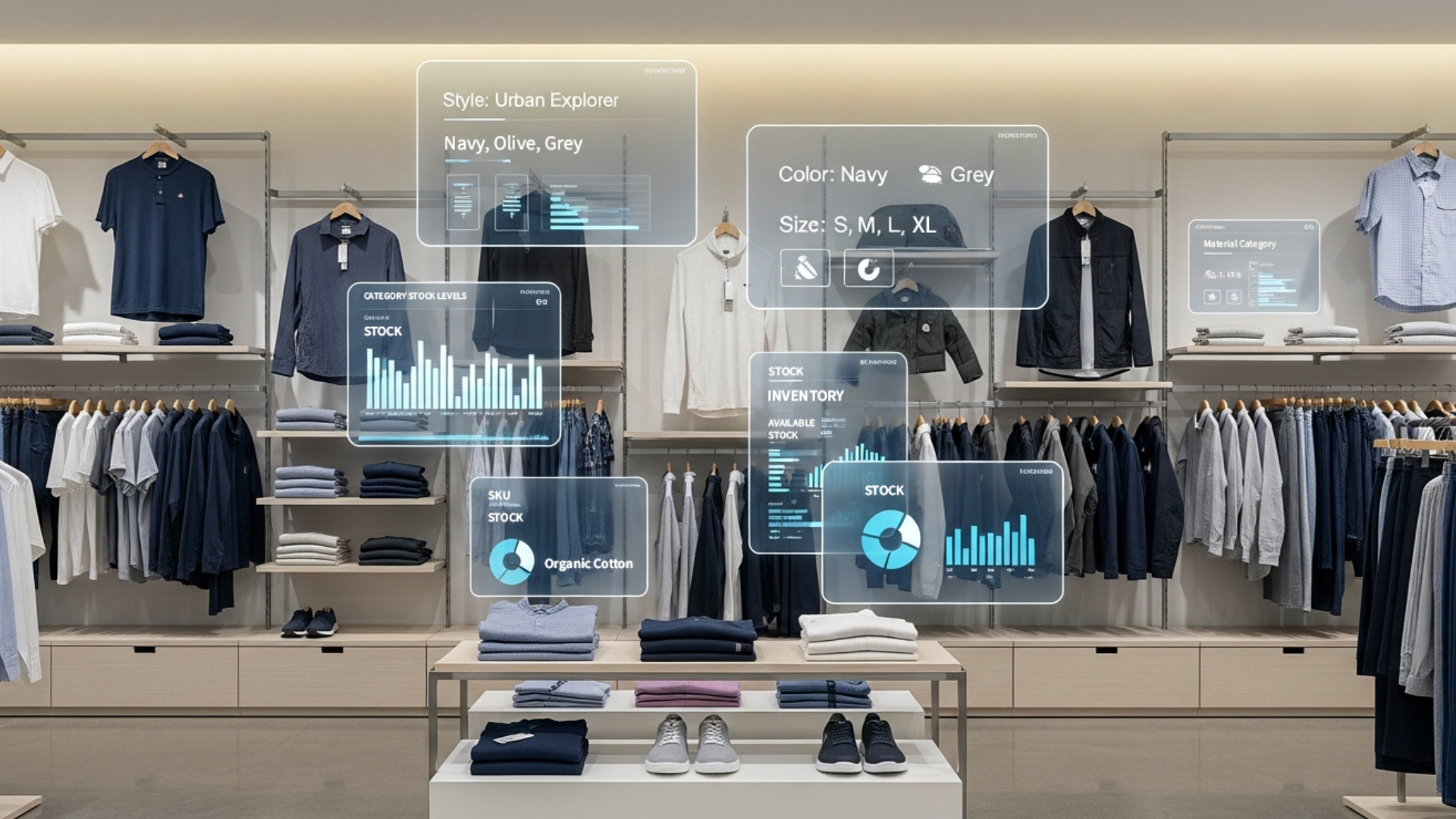
“AI enhances demand forecasting and inventory management by rapidly analyzing large data sets from various sources in real time to deliver accurate forecasts and data-driven inventory recommendations. With faster insights—down to style, color, size—brands and retailers are able to make agile inventory decisions that align with demand in real-time and optimize stock levels across channels by predicting what products are needed, where and when.” – Max Ma
By improving inventory management, retailers can hold the right number of products in the right colors and sizes at the right locations, enabling them to better meet customer demand while minimizing warehouse costs and maximizing profitability due to reduced stockouts.
Using AI to better forecast demand leads to improved accuracy and customer satisfaction, making this technology a critical part of today’s inventory management systems.
The Future of AI in Inventory Management
Going forward, we can expect AI to improve more and more over time, both in general and for retailers using the technology. Retailers have already been reaping the benefits of using AI in inventory management, reporting actual numbers demonstrating the improvements they’ve seen. But the more a retailer uses AI for things like demand forecasting, the better it will get at predicting customer flows and demand. Those that start early will gain a competitive advantage, as the gap between adopters and laggards is only going to widen.
Artificial intelligence is quickly becoming the foundation of efficiency in the world of retail—from demand forecasting and sales analysis to localized allocation and personalization. The technology is arriving on the scene just in time, promoting agile strategies as shopping behaviors shift faster than ever. In response, retailers are building more responsive planning strategies to meet shoppers where they are, with products they are looking for, and AI is becoming central to that effort. Using AI, retailers can more accurately forecast sales trends, quickly respond to shifting consumer behaviors and preserve loyalty—making it a core part of their strategy as they face volatile demand.
Why Chatbots Shouldn’t Be a Top Area of AI Spending for Retailers
Given consumers’ familiarity with generative AI and the cost savings associated with using AI for customer service functions, some retailers are spending heavily on generative AI chatbots in an effort to increase personalization for online shopping experiences. According to Prosper Insights & Analytics, more than 70% of Americans ages 18 and older would prefer to speak to a live person rather than a generative chat program.
“Of course, this isn’t the only use case for AI in retail, nor is it necessarily the most effective use of budget; consumers are very familiar with AI, but that doesn’t mean they want to deal with it when shopping, and until sentiment around AI for customer service changes, spending may be better focused on optimizing inventory and supply chains or enhancing merchandising strategies. These are use cases that directly impact the bottom line,” commented Max Ma, CEO and Founder of 7thonline.
Staying Ahead of Shoppers & Driving Loyalty with AI
According to a recent 7thonline survey, one-third of retail executives are already using AI to forecast and analyze demand, while 34% expect it to play a major role in sustaining or growing profits over the next two years. Retailers aim to use AI to stay ahead of shoppers by predicting and capturing emerging trends. The ability to analyze mass amounts of historical and current data in real time down to style, color, size is invaluable to stay ahead of shoppers.
Retail success has come to depend on AI tools that are able to identify exactly what shoppers are looking for, when they are looking for it—improving the customer experience and fostering loyalty. Brand loyalty is a challenge in the current environment, especially among younger generations who are more likely to switch brands based on price and other qualifications, like value alignment.Forrester estimates that brand loyalty will decline 25% in 2025, adding that saving money is one of the top five reasons consumers in the U.S. will try a new brand. Additionally, a recent Prosper Insights & Analytics survey, found that 39% of Americans age 18+ are buying more store brand or generic products due to price increases. Customers are also shifting away from traditional, transactional programs toward more personalized, value-driven and emotional shopper experiences.
Improve Demand Forecasting—AI at the Core of Retail Strategy
AI’s ability to analyze massive amounts of real-time data in a snap is the crux of its ability to accurately predict sales all the way down to style, color, size, by location. By delving deep into both internal and external data, and current and historical trends, AI models can spot patterns that a human would probably miss when looking at a large number of spreadsheets.
Unlike human analysis, AI technology can easily and quickly incorporate external data like weather conditions, social media sentiment, sales put on by competitors and impact from brand promotions. As a result, retail executives who know the best places to spend their AI dollars will be better prepared to weather the current storm.
The AI in commerce market ended Q3 with big news: shoppers can now buy products directly in ChatGPT. With Instant Checkout, ChatGPT isn’t just a guide—it’s a storefront.
Earlier this week, OpenAI announced a partnership with Stripe, Etsy and Shopify that connects people and businesses to the next era of commerce—using AI as a key interface for how people discover, decide and buy. While conversational AI has already proven its value in product discovery and customer service, the ability to complete purchases directly within a chat interface marks a major leap forward.
While the general population is curious but cautious about AI-powered shopping, over 700 million people use ChatGPT every week. So, chat, is this partnership the turning point for how people will feel about using AI to shop?
Click From Chat to Checkout: Full-Funnel AI Shopping
Until now, conversational AI has helped shoppers discover products, ask questions, and compare options. But one critical step remained outside the AI loop: the transaction itself. This seamless integration of discovery, decision-making and transaction radically simplifies the buyer journey. It eliminates friction, closes the loop and turns intent into action in a matter of seconds.
This isn’t just a user experience upgrade; it’s a fundamental shift in how consumers interact with brands and make purchases.
While Americans still have hesitations around AI-assisted shopping—for various reasons found here—we believe this is the feature that will unlock consumer acceptance of AI in commerce. Why? Because it offers something every shopper wants: speed, simplicity and confidence. That’s the kind of efficiency today’s consumers demand—and tomorrow’s AI-native shoppers will expect.
The Market Has Spoken: Retailers on AI in Commerce
For retailers, this marks a new chapter—one where traditional product journeys are compressed into a few lines of dialogue, and AI doesn’t just influence conversions, it owns them. For brands and retailers, this shift changes the game. We’re entering an era where brand visibility, product discoverability and conversion will increasingly be influenced—or entirely driven—by AI systems.
“Bringing Shopify merchants into ChatGPT lets indie brands to household names reach customers in entirely new ways, meeting high-intent shoppers in relevant conversations. From search to social media and now to agent-assisted shopping, our goal is always to make sure our merchants are at the forefront.” – Vanessa Lee, VP of Product at Shopify
Merchandising strategies, inventory planning and assortment decisions need to evolve to account for AI-driven demand signals. Retailers can’t just think in terms of website traffic or social ads anymore. They need to think in terms of chat visibility. AI is curating the chaos of the digital shelf, making product discovery more intuitive, more relevant and more human.
“It’s Etsy’s job to help shoppers discover special items our sellers offer—even when they don’t think to come to Etsy. ChatGPT helps us meet buyers where they are.” – Rafe Colburn, Chief Product and Technology Officer at Etsy
The recent partnership between OpenAI and major commerce platforms is a clear signal that the retail and tech markets are aligning around a new shared vision: AI will become a core sales channel. And that bet is backed by more than hype. It reflects a maturing ecosystem that’s ready to deliver value.
By turning ChatGPT into a fully shoppable interface—powered by trusted platforms like Stripe, Etsy and Shopify—OpenAI is helping redefine AI in the commerce space. For retailers and brands, this is the moment to rethink visibility, discoverability and conversion in a world where AI is no longer just assisting the shopping experience—it’s becoming the channel itself.
To discover more retail trends, industry insights and innovative shifts in retail tech, read our blogs. Share your thoughts with the team by emailing info@7thonline.com.
It’s no secret that artificial intelligence has changed the world, but the full power of what this technology can do has yet to be discovered—especially in the retail space. Many retail tech solutions are serving the industry with AI-powered demand forecasting and personalization capabilities, but true impact and ROI comes from embedding AI throughout the merchandising cycle, across channels.
According toNVIDIA’s report on the State of AI in Retail and CPG in 2025, 42% of retail firms are actively using AI in their operations, while 47% are still in the assessment phase. However, only a little over half of those using the technology are using it for more than six use cases stretching across their operations.
For retailers that aren’t using AI across their workflow, forecasting tends to be the one place where they are using it. Arecent 7thonline survey of 100+ retail executives revealed that 33% of leaders are currently using AI to analyze data and forecast demand. Of course, forecasting is a critical piece of the retail puzzle, especially as demand fluctuates and expectations rise, but it’s not the only piece. AI should also be embedded in inventory management, supply chain management, merchandising and planning, in-season open-to-buy, sentiment analysis and more.
Why AI Is Needed in Every Part of Multi-Channel Processes
While AI has many benefits, the true value of AI in retail comes from its ability to boost profitability and preserve margins through proactive, data-driven decisions. NVIDIA reported four out of five retailers using AI claim it has boosted their annual revenue, with 25% stating revenue increased by more than 20%. Success isn’t achieved by simply adding AI to a tool and hoping for results, it’s achieved by embedding it into every stage of the retail workflow.
Retailers using AI for forecasting have seen impactful benefits, but without end-to-end integration, its full potential remains untapped; forecasting is only the first step to AI adoption in retail. 7thonline’s latest survey revealed that while only 16% of those utilizing AI are using it for demand forecasting, 34% of retail leaders expect AI to play a major role in sustaining or growing profits within the next two years.
Here Are Some Ways to Embed AI into Different Steps of the Retail Process
AI for Supply Chain Management –
AI helps retailers navigate the complexities of global trade in response to tariffs, sanctions and other disruptions affecting various parts of the supply chain to better align production decisions and shopper demand. Utilizing AI-driven insights, such as “what if” scenarios, retailers are able to determine what might happen if they need to switch suppliers or where they get their products from.
AI Solutions in Inventory Management –
Pre and in-season inventory management is one of the most common AI use cases in retail, according to NVIDIA; retailers can stay ahead of the game with decisions that maximize inventory productivity and enhance customer satisfaction. Using AI, they can create detailed item-level plans across channels, make dynamic open-to-buy decisions and allocate based on localized demand for each store. Utilizing AI and real-time sales data, retailers are able to determine each item’s propensity to sell at different locations and predict when products will sell out during the season—enabling proactive reorder decisions to maintain the right assortment mix down to style, color, size. Deep demand insights empower data-driven decisions based on the latest selling trends, such as when to replenish stock, reorder best sellers or develop a promotional plan for slow-moving items.
AI-Powered Demand Planning –
AI improves demand forecasting accuracy and identifies risks and opportunities with robust visibility into what resonates with consumers, reducing inventory risk and driving strategic growth. NVIDIA revealed analytics and insights into areas like sentiment are a common use case for AI in retail—helping retailers understand consumer behavior based on all customer affinities: product, time, location and media consumption. AI can crawl for customer reviews and social media posts to uncover product sentiment and marketing contribution margins, enabling retailers to adjust their merchandising and promotional strategies. By analyzing the performance of past products, AI can also make predictions about how well new styles might sell based on the demand of previous products with similar attributes for smart expansions into new markets and product categories.
Making the Most of AI in Retail
Many retailers who have dipped their proverbial toe into the water of AI have only scratched the surface of what it can do; until retailers embed AI into every step of their operational workflow, they won’t be able to reap the full benefits. With AI embedded into every aspect of their multi-channel processes, that’s when their business will truly soar.
Before you know it, the biggest time of year for retail will be here: Black Friday/Cyber Monday, aka holiday shopping. But between tariff policies, tight wallets and teetering loyalty, retailers this year will have to navigate more than just bold discounts and eye-catching campaigns to boost holiday sales—they need reliable multi-channel demand planning strategies. Brands planning smarter will prevail, and combining AI and brand identity will be key.
Brand Loyalty vs. Bargain Hunting: What Wins Over Today’s Shoppers
According to the Wunderkind 2025 Tariffs Consumer Impact survey, 76% of Americans say they’re willing to switch brands for better prices—consumers are leaving loyalty behind for a 10-20% deal. This cost-conscious generation of shoppers puts concerned retailers in a sticky situation as prices increase and purchasing power diminishes with tariff policies, especially the66% majority that cannot afford to absorb the extra import costs.
June saw the first tariff-induced price hikes with goods seeing the highest cost increases in the past five months, with theConsumer Price Index increasing by 0.3%.
“Inflation has begun to show the first signs of tariff pass-through. While services inflation continues to moderate, the acceleration in tariff-exposed goods in June is likely the first of greater price pressures to come. The Fed will want to hold steady as it awaits more data.” – Ellen Zentner, Chief Economic Strategist at Morgan Stanley Wealth Management
Between wavering brand loyalty and declining purchasing power, retailers are having torethink demand for the holiday season.
Enhance Retail Holiday Planning Ahead of the Frenzy
Get ahead of the Black Friday/Cyber Monday frenzy with thoughtful planning.
Holiday demand can be unpredictable, and withongoing supply chain challenges, even top retailers can fall short with their inventory management—but the era of shopping showdowns is over. Gain a competitive edge with thoughtful planning andsmart allocation that minimize inventory risk.
For apparel and fashion brands, it’s not just about having enough product—it’s about having the right product,in the rightsizes, at the right locations. Smart allocation is critical. Thoughtful planning is non-negotiable.
A misstep can lead to missed sales, frustrated customers and excess inventory where it’s not needed. This season, precision in distribution andmindful assortment planning aren’t just a nice-to-have—it’s necessary to meet shopper expectations andpreserve your tariff-burdened margins. That’s where AI-powered solutions come in.
Multi-Channel Demand Planning: Combining AI and Brand Identity
The uncertainty and continuously-changing conditions of today’s retail landscape are changing the way people are buying, especially for the holidays. With AI-poweredretail planning software informing inventory decisions, retailers can seamlessly blend detailed analytics with merchant intuition and creativity to meet shopper expectations and demands—down to style, color, size.
Combining brand identity with AI enables retailers to deliver a more personalized and consistent shopping experience that aligns with customer expectations. By leveraging AI to analyze customer behavior, preferences and purchase history, brands can produce and stock products that reflect the brand’s aesthetic and align with their target audience. This fusion ensures that every interaction—whether online or in-store—feels authentic and tailored, reinforcing brand loyalty while increasing conversion through smarter, more intuitive product offerings across channels.
To learn more about how AI can help brands and retailers stay ahead of consumers during the busiest time of year in retail,book a demo or email us at info@7thonline.com.
In today’s fast-changing retail landscape, precision and agility are more critical than ever. Max Ma, CEO and founder of 7thonline, sat with CityBIZ for a Q & A. Max shares how his vision for data-driven, SKU-level planning is helping brands move beyond outdated forecasting models to fully integrated, AI-powered merchandising strategies. From founding insights to 7thonline’s strategy, this conversation sheds light on what it takes to thrive in modern retail.
What inspired you to establish 7thonline in 1999, and how has the company’s mission evolved since its inception?
I started working in retail as a software engineer, and quickly realized that the industry needed more effective ways to boost inventory productivity. It was surprising to see multi-billion dollar companies with completely manual processes. I (specifically) saw an opportunity to use artificial intelligence to improve the inventory decision-making process. We embraced the challenge; breaking the cycle of low margins, limited resources and sub-optimal decision-making. Ultimately, we believe that AI will improve quality of life as there is a more efficient use of time, better results and cost efficiencies.
We’ve been developing our AI solutions for 25+ years through continuous R&D and client collaboration to specifically address industry needs. Early on, we introduced AI tools for wholesale buying and planning, partnering with major wholesalers like Liz Claiborne, Jones Apparel Group and Kellwood. Over time, we added a whole suite of demand planning capabilities to addressdirect-to-consumer retail needs, servicing brands with both DTC and wholesale channels toalign supply and consumer demand, increase margins and reduce excess stock.
Today, 7thonline remains committed to helping the retail industry, which still relies heavily onExcel, by offering AI capabilities that enhanceprofitability and elevate inventory productivity. We’re always developing new functionality, expanding our algorithms and utilizing advanced AI and machine learning to help streamline retail and wholesale processes.
7thonline leverages advanced analytics, machine learning and AI to enhance retail merchandising strategy. Could you elaborate on how these technologies enhance demand planning and inventory management for your clients?
Using cutting-edge technology such as advanced analytics, machine learning and AI, we’re enabling retailers to better understand their customers and meet their expectations—from analyzing demand drivers to adaptive forecasting, the system considers all consumer affinities for the most accurate forecasts. Our system architecture is based on various AI methodology, and has laid a powerful foundation to support retailers in their planning and inventory management needs. Withthe latest LLM capabilities, we are taking the platform to the next level.
These technologies enhance demand planning and inventory management by analyzing data such as historical sales—down to style, size, color and store per week—to predict demand and inform decisions; by being demand-driven, retailers can make inventory decisions based on a product’s propensity to sell. With increasedtariffs, making the right inventory decisions is even more critical—the “wrong” decisions become more costly. By only importing goods necessary to fulfill demand, retailers can avoid the costs associated with excess inventory and preserve their margins. AI simply makes this process much easier.
The retail sector faces challenges like seasonal demand fluctuations and supply chain disruptions. How does 7thonline’s platform address these issues to support retailers effectively?
We understand that the retail industry is primarily focused on short lifecycle and seasonal products, and have taken the related challenges into consideration when building our AI-native platform. Using industry-specific algorithms to address industry-specific needs, our system helps retailers dynamically adjust their inventory strategies to shifting consumer demand.
For example, forecasting demand is hard, but forecasting demand for new seasonal items without a sales history is borderline impossible. 7thonline’s AI-based platform is able to address this gap in information by analyzing data from similar styles and their performance, to predict their future sales based on trends and granular insights. Because of the sheer volume of data—down to style, color, size, store location and weekly sales—this is extremely difficult without artificial intelligence. The system leverages a wide range of data sources such as POS data, shipment data, logistic and warehouse data and marketing data to analyze the demand signal from every single channel of distribution.
Your solutions have been adopted by notable brands such as PVH, Patagonia, and Canada Goose. Can you share a success story that highlights the tangible benefits a client experienced after implementing 7thonline’s solutions?
7thonline has been servicing the retail industry for over 25 years; we’ve had clients stay with us for decades because of the firsthand benefits they experience using the system.
For example, a multi-billion dollar wholesale client was dealing with growing supply chain costs and sought to improve its operational efficiency and production accuracy across 11 global brands. By using our AI-powered account planning system, they were able to expedite their production buy orders one week earlier than their competitors, resulting in a $1/garment cost reduction.
For another client, a major retailer operating 8,000+ stores, allocation was their main concern—they wanted to improve allocation productivity and reduce operational costs from imprecise allocation and replenishment processes. Using the AI-powered forecasting capabilities, they were able to improve inventory accuracy from 60% to 92%, efficiently aligning stock to consumer demand and reducing the reallocation efforts.
Want to learn more about what 7thonline could unlock for your brand? Let’s run a concept study to determine yourROI. Email us at info@7thonline.com.
As the retail industry continues to evolve, what trends do you foresee, and how is 7thonline positioning itself to meet the future needs of retailers?
Throughout the years, we’ve been fortunate to partner with leading global brands and retailers to conceptualize and develop new functionality that enhances our solutions based on industry needs. We’re constantly collaborating with clients to develop new tools that improve retail processes and inventory decisions as the industry’s needs evolve.
Recently, we’re seeing more and more retailers place an importance on data analytics and efficiency. The biggest tech trend: artificial intelligence. While brands are always searching for innovative tech, AI is what’s on everyone’s radar right now; we think that more brands will continue to adopt AI in order to stay competitive in a saturated market. We’re particularly excited by the AI boom as artificial intelligence is embedded into the core of our system, providing us with a new frontier to collaborate with innovative brands looking to adopt AI capabilities—we’ve been doing AI for the past 25+ years.
The retail industry is all about timing and shopper expectations that never stop evolving. The ability to predict what might happen is no longer enough; retailers need to know what to do next. That’s where prescriptive AI enters the picture. Not just as a powerful tool, but as the strategic backbone of smart allocation and retail success.
Retailers that still rely on manual planning or predictive analytics alone are at risk of falling behind. While predictive AI can analyze past data to forecast trends, prescriptive AI goes further by recommending exactly what action to take to achieve optimal results. It’s the difference between saying, “We’re likely to run out of stock next week,” and “Ship 300 size mediums to Chicago by Thursday.”
According to a recent survey of 100+retail executives about their retail strategy by 7thonline, 33% of retail executives are currently using AI to analyze/forecast demand. The move from predictive AI to prescriptive AI is a game-changing shift.
Why AI Matters in Retail: Prescriptive AI, Predictive AI, Agentic AI and Beyond
As artificial intelligence continues to develop, retailers are increasingly faced with the challenge, and the opportunity, to integrate AI intoevery step of their workflows in meaningful ways. But to truly unlock AI’s value, it’s important to understand the distinctions between different types of AI—in particular, prescriptive and predictive AI. Knowing how and when to apply each can make the difference between basic automation and transformative performance.
Today’s most visible AI applications often fall under the category of generative AI—think of ChatGPT writing a blog post or GitHub Copilot recommending code—these tools rely on large language models to generate output. They are not built to make decisions based on future possibilities.
Predictive AI in Retail Leads to Smarter Forecasting, Limited Action
Predictive AI is built specifically to forecast what is likely to happen based on patterns identified in historical data. It’s one of the most widely adopted AI tools in retail, helping brands anticipate demand, understand customer behavior and plan seasonal strategies. From identifying best-selling products to forecasting supply needs, predictive AI informs planning, but stops short of driving execution.
Some of the benefits of predictive AI for retailers include:
Risk Mitigation – By identifying potential risks and operational vulnerabilities early, predictive AI helps retailers take preemptive action, improving supply chain resilience and cost control.
Optimized Resource Allocation – Forecasting demand more accurately helps retailers avoid overstocking or understocking, leading to better inventory balance and reduced carrying costs.
Personalized Customer Experiences – Predictive models enable tailored marketing and merchandising based on customer behavior, increasing satisfaction and driving conversions.
Improved Product Development – Insights into trends and customer needs help brands launch more relevant products, better manage SKUs and refine future collections.
The challenge? Predictive AI might tell a retailer that outerwear sales will spike in October, but it won’t advise how many coats to ship, where to ship them or what sizes and colors are most likely to sell in each region. That kind of tactical guidance requires something more powerful.
Prescriptive AI: From Inventory Guesswork to Precision Execution
This is where prescriptive AI transforms retail strategy. Unlike predictive AI, prescriptive tools don’t just analyze trends, they recommend real-time, data-driven actions to achieve the best outcomes based on the brand’s needs and challenges. Prescriptive AI takes into account past sales, current stock levels, store performance and supply chain constraints to guide decisions at a granular level.
In inventory management, for example, prescriptive AI enables brands todynamically allocate products across channels,optimize assortment mixes and make agile in-season decisions to preserve margins. It connects planning with execution, automatically and intelligently. Some of the benefits of prescriptive AI for retailers include:
Optimized Operations – Prescriptive AI improves workflows by offering concrete recommendations for day-to-day tasks like allocation, replenishment and merchandising.
Faster, More Confident Decision-Making – Retailers gain immediate, real-time insights that empower teams to act quickly and accurately in fast-changing market conditions.
Enhanced Customer Satisfaction – By ensuring the right product is in the right place at the right time, brands deliver better shopping experiences, driving loyalty and repeat purchases.
Strategic Advantage – Prescriptive tools allow retailers to model scenarios, test responses and plan future strategies with more precision, giving them a significant edge in a crowded marketplace.
Prescriptive AI for Smarter Allocation and Fulfillment
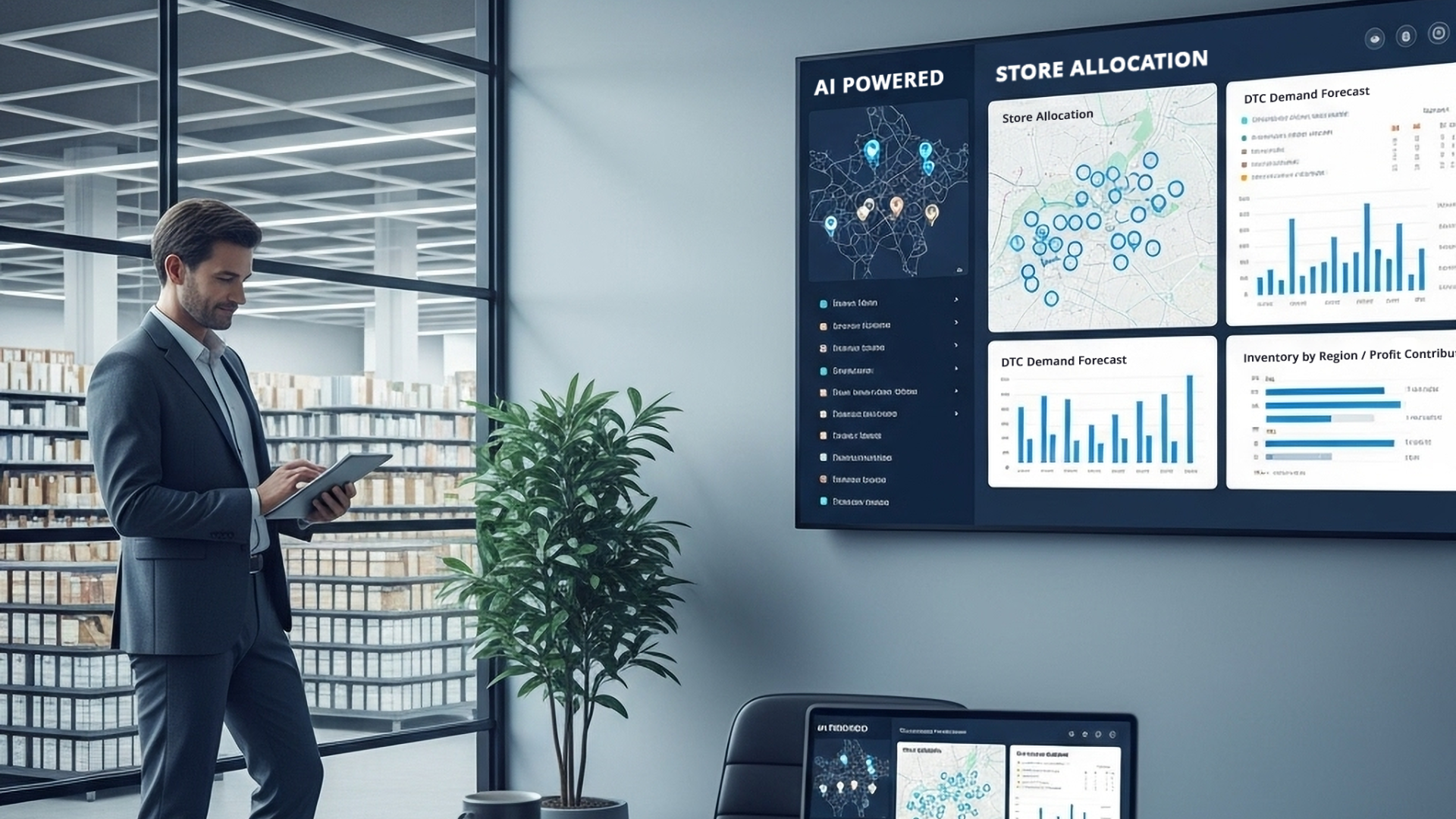
Prescriptive AI is especially powerful when it comes to smart product allocation. Traditional allocation relies on rules and parameters including store size or historical averages. But retail today requires dynamic, demand-driven precision. With prescriptive AI, retailers can identify which stores need more of a specific SKU, which locations will underperform with certain products and when to shift inventory based on real-time sales velocity.
By automating complex planning decisions, prescriptive AI frees up teams to focus on strategy instead of spreadsheets—getting out of“Excel Hell”. Businesses see improved workflow efficiency, tighter supply chain coordination and more agility in responding to disruptions.
More importantly, prescriptive AI helps unify disconnected systems bybridging gaps between merchandising, planning, marketing and fulfillment. The result is a more synchronized, responsive retail organization.
Real-World Results: A $250M Fashion Brand Concept Case
To understand the impact of prescriptive AI in real terms, 7thonline ran anROI analysis for a $250 million brand exploring our wholesale planning and allocation solution.
In the first year, without changes in production, the brand saw a projected $1.9 million boost in revenue, driven purely by better product placement. Alongside SG&A cost reductions, this delivered a 161% ROI. By year two, the brand reached full implementation and benefit realization. By year five, the cumulative benefit grew to $7.3 million, while total cost of ownership dropped to less than half its original value, delivering nearly 8X return on investment.
AI has revolutionized how retailers analyze data by making it faster, more accurate and more intuitive. With intelligent analytics, businesses can move from reacting to problems to anticipating and solving them proactively.
Predictive AI identifies patterns and forecasts future trends, helping retailers make informed decisions. Prescriptive AI goes a step further, using those insights to recommend the best actions to optimize outcomes. Both are powerful, but serve different purposes. Retailers that understand when to use each can turn data into strategic advantage including boosting efficiency, accuracy and performance across their operations.