Fashion Is Done With Remote Work

KEY INSIGHTS

  • Five days in the office is no longer an outlier, as retailers, publishers and fashion brands tighten attendance requirements and fully remote roles fade.
  • Leaders frame the shift as an operational fix, not an ideological one, pointing to communication breakdowns and slower decision-making on complex work rather than simple productivity losses.
  • Execution will determine whether mandates succeed, with companies that clearly explain the rationale, preserve some flexibility and lead by example more likely to retain talent when the labour market shifts again.
Max Ma, chief executive of 7thonline, says nearly every misstep the retail planning software provider made between 2020 and 2023 can be traced back to a single culprit. “All the mistakes we made during that time – they’re all attributable to one thing. working from home,” he said.
 
Like most companies, the New York-based firm – which counts Patagonia, PVH Corp. and Birkenstock among its clients – closed its office early in the pandemic and allowed employees to continue working from home longafter the lockdowns were lifted. Ma said the setup was functional, but that relying primarily on Slack and Zoom made it easier for key details to slip through the cracks. In 2024, the company returned to a five-day-a-week office schedule.
 
“When you’re in the same room, you can stop and ask, What do you mean by that?” he said. “Sometimes even a facial [expression] tells you certain things.”
 
Two years ago, 7thonline was an outlier. Today, its policy is increasingly common.
 
Over the past year, retailers from Amazon to Gap Inc.have mandated full-time returns to the office. In publishing, Conde Nast and Penske Media have moved to four-day mandates, while Instagram is set to require five days starting in February. Across fashion, three days in-office has become the baseline, with many companies planning to push further this year.
 
Fashion executives point to familiar concerns: culturaldrift, weaker collaboration and uneven productivity when teams aren’t physically together.
 
There are other dynamics at play. In a softer job market, employees have less leverage to resist back-to-the-office mandates. And some struggling fashion companies may be using stricter in-office policies to reduce headcount without formal layoffs – effectively nudging employees to fire themselves.
 
Whatever the rationale, how companies execute that shift matters. Offering employees a clear reason for the move – and baking in some flexibility, even if the goal is five days a week in the office, can help ease the transition.
 
“If you’re having very positive employee morale .. at one to two days a week [then] why shake that?” said Damian Chiam, a partner at executive search firm Buro Talent. “But, if you think moving to four days is going to get you triple, quadruple the growth, then it might make sense.”
 

Determining the ‘Why’

 
The data on remote work’s impact on productivity is mixed. Research from the US Bureau of Labor Statistics shows that in some industries – like publishing or data processing – output can be higher when people work remotely. Other research, including Gallup’s latest analysis, suggests employees in remote roles are spending less time working – roughly an hour less per day than before – even as productivity remains roughly steady.
 
Up for debate is whether that hour might have been spent on informal interactions – spontaneous problem-solving after bumping into a colleague in the break room – or covertly scrolling TikTok.
 
Whatever the data shows, the debate over remote work is largely settled in fashion: beyond a narrow set of roles in areas like IT and engineering, companies overwhelmingly want employees in the office, said Paula Reid, an executive coach and president of the talent search firm Reid & Co.
 
“The swing is towards wanting to have people in the office working as a team, developing deeper relationships, having those spontaneous conversations” Reid said.
 
The question is how much: if three days is the consensus, it’s not such a stretch to ask for four. Requiring five days feels more consequential. Vague justifications – “I paid for this space so show up” – are unlikely to be well received, Chiam said.
 
Ma’s case to 7thonline’s employees was more practical than philosophical. As a software provider, the problems that surface at the margins – the bugs, miscommunications or flawed decisions that might affect a small group of users – can be harder to catch on Zoom or Slack. He believes those edge-case failures largely disappear when teams are working side by side five days a week.
 
“We keep evolving our software so we need our developers to discuss what the customer wants,” said Ma. “They have to analyse what this customer said, compared to other customers.. that’s what needs face to face interactions.” (Ma does allow a couple of hands-off roles to remain fully remote, specifically in the engineering function.)
 
Gen Z workers are sometimes proving unexpected advocates for returning to the office. Pandemic-era stereotypes cast younger employees as champions of “quiet quitting” and “cameras off” culture, but in reality many are eager for more face time with managers and senior leaders.
 
“Funnily enough, this whole being-in-the-office thing has been less of an issue for junior talent, because they feel that’s how their careers will grow and thrive,” Chiam said. “They want the camaraderie and the career development they missed during remote work.”
 
It is often middle and senior managers – juggling children or ageing parents – who are more reluctant. Requiring those leaders to be present, experts say, helps set expectations for the rest of the business.
 

What Not to Do

 
While companies no longer have to yield to employees who insist on working from the beach half the year, offering some flexibility remains critical for morale – and, experts say, for staying competitive if the labour market swings back in workers’ favour.
 
“People want to be treated like responsible, contributing adults who are going to deliver results,” Reid said. “That means that if your child has a winter concert and you want to slip out at four o’clock, all somebody’s going to care about is ‘did you get the work done? Then go.”
 
In practice, that’s why four days in the office has started to land as a workable compromise, Reid said. It was a tough sell earlier in the pandemic, but by 2026 many people see it as a reasonable middle ground, she said.
 
Five days is trickier. With layoffs rising across fashion, companies may feel confident enforcing it in an employer’s market, but that confidence can evaporate quickly when the balance of power shifts, Chiam said.
 
Another common mistake: treating return-to-office mandates as a cure-all. As fashion companies deal with slower growth, some are defaulting to what Reid describes as the “low-hanging fruit” – pulling everyone back in, full time, on the assumption that proximity alone will fix deeper issues.
 
“If done well, it can have .. a ‘we’re all in this together” uniting feeling.” she said. “Done poorly, which is how I think most organisations do it, it can make everybody think the building’s on fire.”
 
What matters most, Chiam said, is whether leadership is willing to model the behaviour they’re asking for. CEOs can’t be phoning it in from a vacation home while telling everyone else to show up – and they need to be realistic about how their own flexibility and job demands differ from those of the people they manage.
 
“It’s ultimately their business, so they’re going to dictate,” Chiam said. “But, we also know that without change and being flexible, that could be your future demise.”
 
Ma says he expects five days in office will continue to yield the best results for his business but he always leaves wiggle room to assess his employees’ needs on a “case by case” basis.
 
“We are very flexible – we don’t tie people to their desks,” he said, adding that some of his employees have been with the company for 20-plus years. “Flexibility means we have to consider [that] everybody has their family life.”
 
To learn more about how an AI-powered Similarity Matrix can scale your intuition, email us at info@7thonline.com or book a demo with the team.

From Retail Intuition to Intelligence: How AI and a Similarity Matrix Are Redefining Retail Planning

2026 will be remembered as the year AI moves beyond the headline. As the market becomes saturated with “AI-powered” promises, businesses are reaching a critical inflection point: the need to replace novelty with a cold, hard requirement for ROI. 

In a rush to stay on top of tech trends, many made the mistake of forcing AI into their existing, often fragmented, workflows—treating AI like a shiny new engine they tried to bolt onto a horse-drawn carriage. The results are predictably underwhelming. True transformation occurs when companies prioritize AI investments that address specific, high-stakes business problems. For the retail industry, fashion in particular, the benefit of modern intelligence largely lies in back-end operations: supply chain planning, demand planning and forecasting, inventory management, etc.  

The Retail Example: Escaping ‘Excel Hell’

An industry still reliant on the manual spreadsheet—the greatest enemy of a modern operating model—retail has been stuck in a recurring nightmare I like to call “Excel Hell“. Between complex supply chains and global operations, Excel builds added complexity and frustration across teams through time-consuming manual entries and inevitable inaccuracies.

But the biggest offense of Excel Hell isn’t just the labor; it’s the creation of data silos. When critical information is trapped in a static cell or outdated sheet, it prevents real-time decision-making—relying on manual processes is no longer just inefficient, it’s unsustainable. Automated, AI-powered end-to-end solutions act as a sophisticated nervous system, detecting trends and empowering retailers to respond with nuance. 

The World Economic Forum predicts that this AI use case can improve on-shelf availability by 15-25% and reduce inventory carrying costs by 10-15%. Brands like H&M, Zara, Burberry and more are amongst the many that have adopted AI in their operations, supply chain and inventory management processes. H&M, in particular, created an entire division devoted to AI; since 2018 this department’s expressed goal is to apply AI in different segments of the company to be as data-driven as possible.

Speaking to Supply Chain Dive, Arti Zeighami, former Global Head of Advanced Analytics and AI at H&M dives into the impact AI and predictive analytics has on demand planning. Zeighami stated it’s about “how you make sure the right product is in the right place at the right time and is transported into the warehouse. Utilizing data analytics allows us to do that. And we’re thinking of ‘how can we do this for our entire production?’… We’re working very specifically on being able to calculate and quantify how many cases you’re going to buy [of any item]”.


Scaling Retail’s Sixth Sense for Merchandising

With or without AI, the goal is to precisely align supply and demand. Historically, retailers have relied on their intuition, a “sixth sense” great merchants have to determine which style will pop or which color will trend. But as retail planning becomes more and more complex in a globalized, multi-channel world, the harder it is to scale that instinct—at thousands of SKUs and hundreds of locations, it’s essentially impossible.

To solve this, we developed 7thSense.

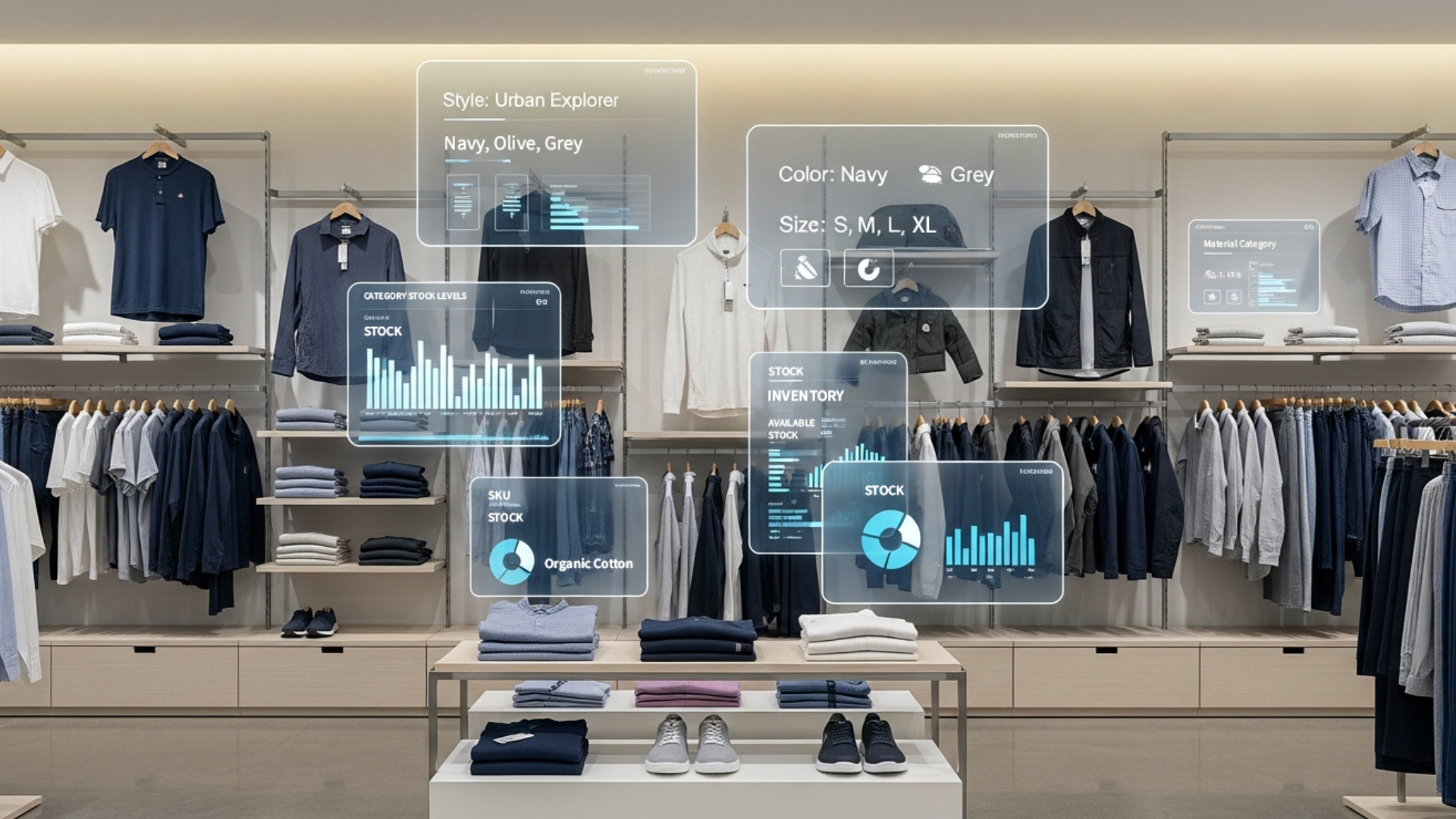
Launching at NRF 2026, this technology reshapes how 7thonline is approaching AI. By introducing a multi-dimensional similarity matrix to scale merchant intuition at a granular level, merchants can uncover hidden affinities, repeat successful patterns and make confident merchandising decisions. Behind the scenes, AI is constantly analyzing data and evaluating hundreds of product and location attributes, such as fabric, silhouette and region, to rank new and seasonal products against past winners.


Solving the “Cold Start” Problem

One of the most specific business problems in retail is the “New Item” dilemma. How do you plan for a product that has never been sold? Traditionally, this involves guesswork or best-guess proxies. For products without performance history, which seasonal items often lack, AI is able to draw insights from similar products to predict how these products are likely to perform. AI empowers retailers to make confident decisions and repeat winning patterns by predicting trends based on a matrix of attributes, product behaviors, market shifts and customer preferences. 


Consider three ways this digital “instinct” redefines the retail operating model:

  • Autonomous Reordering: Instead of a manual scramble to restock, AI monitors real-time sales velocity to project order quantities for new items at various store locations. It recognizes early performance patterns and automatically recommends reorder quantities adjusted for seasonality and lead times. It’s the difference between reacting to a stockout and preventing one.
  • Strategic Promotions: Enhance promotional forecasting with AI that predicts the ideal cadence and sales impact before a promotion goes live. Determined by the historical lift of similar styles, AI is empowering dynamic promotional decisions and maximizing profit impact while protecting margins with clear visibility on the potential sales life of various promotional activities.
  • Hyper-Localization: AI allows brands to finally execute winning assortments down to the style, color and size at the local store level—something that was previously too labor-intensive to be profitable. With detailed insights from previous winners, assortment planning teams can replicate proven strategies for new and seasonal items at individual locations. 


The Human-Centric Future

As we prepare to showcase these advancements at NRF Booth #6823, the message is clear: AI is not here to replace, it is here to liberate. The future of business belongs to those who don’t just “use” AI, but those who integrate it into a smarter, more intentional way of working. 

For retail, extinguishing the fires of Excel Hell and handling the granular, repetitive analysis of millions of data points, empowers merchants and planners to return to what they do best—creative strategy, brand storytelling and high-level decision-making. From intuition to intelligence, the “sixth sense” is no longer a mystery—it’s a matrix.


To learn more about how an AI-powered Similarity Matrix can scale your intuition, email us at info@7thonline.com or book a demo with the team.

The Disconnect in Retail Tech on the Corner of Fifth StreetTalk Podcast

With insight into the fashion, apparel, beauty and retail markets, Corner of Fifth’s StreetTalk Podcast unpacks recent headlines and trends top-of-mind for retailers. Max Ma joins host Arthur Zaczkiewicz to discuss how fashion brands can escape the “dark cycle” of low margins and leverage technology to navigate today’s increasingly complex retail market. 

Some market background —

This year, Cyber Monday landed at the start of December, closing out November with the largest turnout the five-day Thanksgiving weekend has seen. According to the National Retail Federation, an estimated 202+ million U.S. consumers shopped over the long weekend, setting a new record. Defined as a time period spanning November and December, NRF estimates spending upwards of $1 trillion in 2025. Analysis from Adobe reported that while spending was up, inflation and tariffs pushed the volume of goods purchased down, indicating shoppers are being more frugal.

Against the backdrop of the latest, broader retail environment, Max and Arthur drill into the sobering reality of “Excel Hell” and the consequences of having a large tech stack that doesn’t integrate. Many retailers rely on Excel for their retail planning, leading to a fragmented approach to planning, slower decision-making and an increased risk of costly errors. But rather than managing spreadsheets, the right technology empowers them to run their businesses. 

The stakes are even higher as tariffs cut into margins, technology investment, and store renovations. As early inventory buffers are beginning to run out, and tariff costs are expected to fully materialize in 2026, retailers will need to fundamentally rethink their inventory strategies. Max’s perspective is clear: while tariffs are unavoidable, precision in inventory management is not. By moving to a centralized system to conduct planning, brands can eliminate silos and reduce manual errors associated with it—improving efficiencies and productivity to better understand production, supply chain and trending insights. Without the right technology in place, improving net margins becomes nearly impossible. Instead, it creates a dark cycle of costly decisions, low margins, no tech—Max has seen the retail industry stay in this loop for 30+ years.

As NRF 2026 approaches and excitement builds around the latest retail tech innovations, the real challenge lies beyond the conference floor. It’s critical that attendees not only get inspired, but also carry that momentum back into their organizations, and up to senior leadership. Turning excitement into action—and action into sustainable change—will be what separates retailers who survive from those who truly thrive.

Listen to the full podcast here: https://www.youtube.com/watch?v=VxCr8TKu54o 

For more industry insights, check out our blogs or contact the team at info@7thonline.com

The Secret to Omnichannel Demand Planning on the eCommerce Edge Podcast

Discover the secret to demand planning on this episode of the eCommerce Edge Podcast with Jason Greenwood and Max Ma. From data and the rise of AI to complex omnichannel processes, Max and Jason dive into why retailers need to stop treating demand planning like a monthly checklist, and the need to build real-time feedback loops across channels to grow. In an increasingly complex omnichannel world, the right tech can turn planning challenges into strategic strengths. Here’s a quick preview of the conversation:

“It all starts, typically, with a PLM process as a backbone of the product. Once we want to go to production with it, we then have to predict for that initial order (the sizes, colors and variations), and how much on that variation curve we want to produce. Then we have to track momentum, supplier performance of that product, how much we’re going to reorder and how frequently. It’s a complex and disjointed process in many respects. What point does 7thonline come into the supply chain planning process?”

Actually, 7thonline was designed to assist before product design—to analyze who are you designing for, what was sold, who bought your product at what price point, where, etc. We use the data to guide the product design team and determine the future assortment at a very high level. The system helps retailers understand localized demand and forecasts demand to provide production teams with pointed guidance. 

Essentially, we match consumer segmentation to micro demand signals of the products that brands and retailers offer. We’re in the AI age; we use data and analyze your target audience against product characteristics/attributes to bridge the gap between supply and demand from various channels. A lack of structure in product data is often a major challenge. When attribute commonality—such as color, size, style or hem length—is unclear or inconsistent, effective demand planning becomes extremely difficult. Even the most advanced analytics or AI tools cannot deliver meaningful insights without well-structured data.

Establishing strong disciplines around data integrity, data mapping and data validation is the first step we take with every new client. A trusted, well-governed source of master data is critical to enabling accurate analysis and decision-making.


“You see all types of levels of maturity for business, but what size and scale of business typically starts to see benefits from what you do? ”

7thonline is an enterprise software system, designed to support organizations operating at meaningful scale. Most of our customers are larger companies—often with revenues of $100 million or more—because success with a platform like ours requires more than just ambition. It requires the right foundation.

These organizations typically have the infrastructure and data maturity needed to fully leverage enterprise software. Over time, they’ve invested in building reliable systems, establishing governance and, most importantly, treating data as a strategic asset rather than an afterthought. One of the most effective practices we see among these companies is a deliberate focus on master data. Rather than relying on fragile integrations across dozens of disconnected systems, they’ve taken the time to centralize their data. By building and maintaining a unified data warehouse, they create a single source of truth that supports consistency, accuracy and scalability.

This approach doesn’t happen overnight. It’s the result of long-term thinking and disciplined execution. But the payoff is significant: cleaner data, fewer integration challenges and a foundation that allows enterprise platforms like 7thonline to deliver real value. In our experience, companies that prioritize centralized data and strong master data management are far better positioned to turn technology investments into operational and strategic advantages.


“What’s on your radar for the next 6, 12, 18 months, is there anything as you look out into the market of demand planning, inventory management, supply chain management software, that you see and recognize as gaps in the industry?”

High on our priority list is the development of expanded AI capabilities that can capture and scale an expert’s thought process. For years, even many of our most experienced retail customers relied heavily on Excel for demand planning. And to be fair, the industry still loves Excel. But reliance on spreadsheets also creates limitations. Knowledge remains siloed, assumptions are hard to track, and insights live in the heads of a few key individuals rather than being shared across the organization. Our goal is to increase visibility across the board and move beyond static tools toward systems that continuously learn and improve.

One example, we are using AI to determine dynamic classification that is currently human defined—it’s subjective. With AI, it becomes systematic. The result is not just better forecasts, but a more transparent, scalable and resilient planning process that evolves alongside the business.


Listen to the full podcast here: https://www.youtube.com/watch?v=haJknRGYX0Q&utm_source=hs_email&utm_medium=email&_hsenc=p2ANqtz-_kc1LahTFMSsgWNYLb16-lcjBCBlMxpG_8LLSJ2Q1snoOfrOcaTJ86kmdcJ-R8ZXZCGKDB 

For more industry insights, check out our blogs or contact the team at info@7thonline.com

Retail101 Online: How AI is Rewriting Retail Planning on the Retail Voices Podcast

Max Ma sat down with Mark Lack on Retail Voices, a podcast where leaders from the world of retail talk about what really works: insight, innovation and the human side of the industry. In the episode, the industry veterans break down the real reason retail planning fails and how AI is transforming processes. From dirty data and omnichannel distortion to guardrails and balancing the art and science of merchandising, Max and Mark’s conversation dives into the heart of what makes modern retail operations succeed. Here are a few key insights:

“If you could print one KPI on every planner’s wall, what would it be and what’s the most overrated or underrated forecast signal you’ve ever seen?”

Print this above your computer screen as a daily reminder: increase net margins by 1% every other year. The margin challenge is a depressing reality for the retail industry—low margins restrict budget for new tools, a lack of tools keep retailers guessing and stuck in the same cycle. A percentage boost may not be realistic year over year but striving for that improvement, even in small increments, is still a positive trajectory toward the bottom line. 

The most overrated signal? Macrotrends. Businesses should look at their own data and microtrends to determine what they can conquer first. Once internal efficiencies and data quality are optimized, then retailers can look outward at other elements to improve planning. An underrated signal from planning efficiency is out-of-stock and availability; retailers tend to overlook the negative impact brought on by out-of-stock numbers: how much out-of-stock has caused in losses and the opportunity cost of it all. Nonavailability has been overlooked as consumers (reluctantly) accept the reality of out-of-stock items in favor of convenience—while purchasing the closest alternative isn’t ideal, they make due. But eventually, without the right products in the right place at the right time, customer loyalty falls and they become frustrated.


“Most retailers have really messy data. What do you think should be the first 2-3 steps that any retailer should take before investing in any AI planning tool?”

With retailers implementing many different systems, there are many different versions of data. The first step is to have a master sheet; master data to ensure data integrity and a single version of truth. The second step is to smooth out anomalies—the white noise that shouldn’t be considered in future decisions. Lost sales and out-of-stock needs to be backfilled into your data, and unproductive sales need to be filtered out to set an ideal base for decisions. 


“How do you keep store-level inventory availability honest when online and offline are competing for the same stock?”

7thonline is a unified planning solution, we pride ourselves on empowering an integrated approach that not only takes into account brick-and-mortar and ecommerce but also different distribution channels like wholesale and franchisees. Clients are able to look at the demand signals of all channels on a centralized, unified place to forecast demand more precisely. 

Our system is robust enough to account for different data formats. For instance, wholesale channels won’t display sell-through data, only sell-in data. So how do you forecast? For ecommerce, what about the media buying aspect? We have to consider the “4th dimension” to account for the promotional heavy strategy that influences the retail cube: product, time, location. A robust system can process all of these to provide a more accurate and comprehensive view of demand to precisely forecast based on the needs of individual channels. 


Listen to the full podcast here: https://www.youtube.com/watch?v=1YWmitUxzSc 

For more industry insights, check out our blogs or contact the team at info@7thonline.com

The Death of “One-Size-Fits-All” Retail in a Data Driven Retail Industry

Retail is at an inflection point. The reign of the “one-size-fits-all” retail strategy is almost over. After decades of top-down merchandising and uniform planning cycles, consumer expectations and data capabilities have outgrown many planning, inventory and allocation models. 

For too long, the industry has operated with an approach that relies on generalized data, blanket decisions backed by gut-instinct, cumbersome Excel spreadsheets and blind hope that past mistakes won’t repeat. This model isn’t sustainable in a world of hyper-fragmented consumer choices, volatile demand and expensive misallocation. Retailers are experiencing huge markdowns and wasted inventory, but that’s all changing.

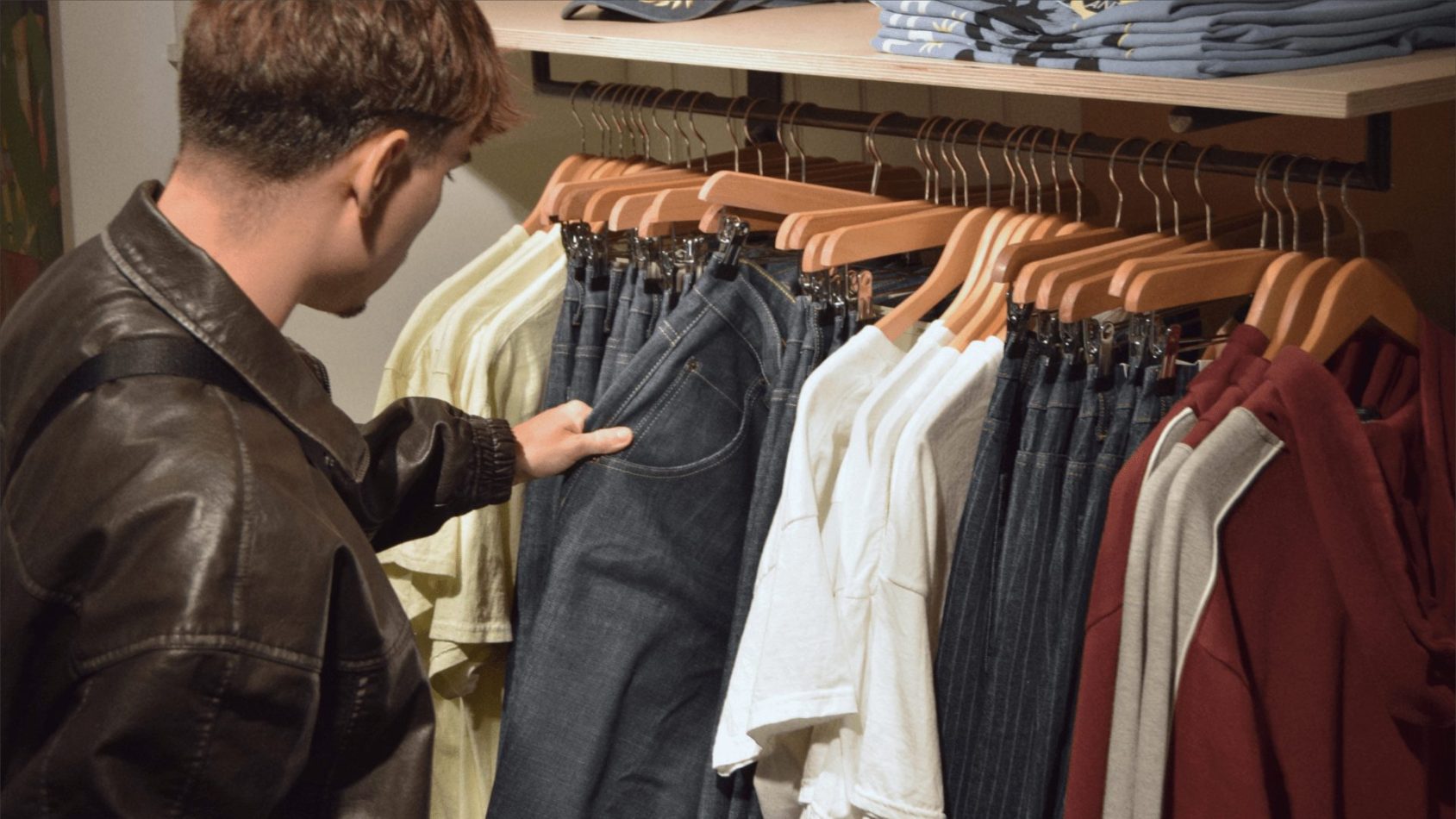
person shopping for clothes

The Broken Centralized Approach

The conventional retail buying cycle is fundamentally broken. Oftentimes, the exact bulky winter coats offered in blizzard-expecting Boston are available in sunny Los Angeles. This is the industry’s most critical blind spot. 

Old school reporting tools can show you big picture trends, but they often miss regional patterns. While algorithms and AI models are setting a new standard for data accuracy, the real success in fashion merchandising comes from combining creativity and industry expertise with nuanced AI insights. When retailers understand local markets and customers, they are able to anticipate trends, adjust and connect with shoppers wherever they are. AI enhances this art by analyzing data at scale and providing performance-based recommendations tailored to each SKU, store and channel.

Shifting Away from a One-Size-Fits All Approach with AI Precision at Scale

Artificial intelligence is reshaping retail by enabling a level of precision and personalization that was previously unattainable with purely manual efforts. By analyzing a wide range of real-time internal and external signals from performance metrics and weather, AI is enabling retailers to operate more like thousands of micro-businesses—scaling precision. This level of insight enables retailers to anticipate shifts in customer behavior at a micro level, empowering planners to fine tune their strategies to reflect the specific preferences, behaviors and seasonal trends of local consumers. 

By leveraging real-time data and predictive analytics, retailers can shift from broad strategies to highly targeted, demand-driven operations that optimize turnover, minimize markdowns and protect profit margins. This tailored strategy ensures that retailers are responding effectively to specific consumer demand and each market’s unique trends and seasonality with dynamic open-to-buy budgets and agile allocation strategies. Shift from static forecasting models to adaptive approaches that ensure relevance—the future of retail inventory management lies in precision mixed with human instinct.

The Art and Science: Turning AI Insight into Localized Assortment

As retailers plan for 2026, the focus isn’t simply on managing inventory through a more targeted and accurate assortment—the technology exists to provide the precision needed to match products to demand at the store level. The impact is measurable. 

Real success isn’t about replacing the human planner’s creative instinct, because it’s that intangible that creates success, creativity and an exciting shopping experience. Better results come from enhancing that expertise with data. AI manages the complexity, giving planners and regional managers prescriptive, actionable insights. The data tells them what they should do next. Merchandisers, the experts who hold the brand’s DNA and deeply understand their community, apply their intuition to fine-tune assortments, ensuring they connect not just with a data profile, but with the specific needs of the local shopper.

Embracing the Data-Focused Future

As 2025 comes to a close, there’s a unique opportunity to move from a generic, centralized strategy to an efficient, demand-driven and data-focused way of working. This new strategy thrives by managing complexity at scale, seamlessly combining algorithmic speed with the nuanced interpretation of human planners.

Retailers need to stop viewing technology as a niche project for the IT team. It is now the essential tool for operational efficiency and survival in a volatile market. The future belongs to those who embrace the market’s complexity and manage their entire enterprise as a finely tuned network of thousands of responsive, demand-centric micro-businesses. It’s time to invest in the next generation of AI planning tools. That’s how we ensure every decision is made intelligently and profitably.

Find the full article in Fashion Mannuscript here: https://issuu.com/mannpublicationsmagazines/docs/fm_november_december_full/77

Talk to the team to find out how you can join the end of “one-size-fits-all” retail at info@7thonline.com or book a demo.

Consumer Insights: Planning Ahead for the New Retail Calendar

Every year, consumers are starting their seasonal shopping earlier—from back-to-school and summer-vacation prep to Halloween costumes and Holiday gifting. Each of these moments affect the retail calendar, requiring early demand forecasting, strategic inventory planning, promotional alignment and channel-specific strategies. To keep pace with the shift, retailers must respond by reworking their retail calendar, moving planning and execution cycles forward to capture demand before the peak seasons even begin.

The Early Shopping Trend Requires Agile, Early-Stage Planning

When shoppers start early, so should you. 

To stay competitive and meet customer expectations, brands must adopt intelligent, proactive planning processes that anticipate demand well in advance. Early shopping trends require synchronized, end-to-end planning that spans product development, supply chain and merchandising. 

According to the National Retail Federation’s 2025 survey, 67% of back‑to‑school shoppers had already started buying before early July—up from 55% last year. This early-shopping trend extends beyond back-to-school. NRF also revealed 49% of consumers prep for spooky season before October, versus just 34% a decade ago. Retailers who plan early are better positioned to reduce stockouts, avoid excess inventory and deliver a seamless customer experience during high-demand periods.

AI-driven platforms enable businesses to forecast earlier and with greater accuracy by analyzing emerging trends, historical data and real-time market signals. This ensures inventory is not only available but also optimized across all channels—before peak shopping begins.

What the New Retail Calendar Means for Retail

One major reason shoppers are shopping early? Cost.

“For consumers looking to balance their budgets, strategies such as buying early to spread out purchases or shopping at discount stores are just some ways they are being mindful of costs,” Prosper Executive Vice President of Strategy Phil Rist said.

Between tariffs, inflation, job market volatility, etc. shoppers are now more conscious than ever about pricing. But how should retailers adapt to the new retail calendar?

  • Stretch the calendar: Traditional start dates for “seasonal moments” are giving way to multi‑week or even multi‑month promotional windows. Retailers are stretching their retail calendar to start buying seasons earlier. 
  • Inventory planning matters more than ever: If your products arrive too late, you lose the early shopper. If they arrive too early without demand, they take up costly space.
  • Tiered promotions: Campaigns, social media, email and visual merchandising need to launch earlier to match consumer intent. The first wave of early shoppers may respond to “pre‑season” offers or loyalty exclusives. Later shoppers may need deeper discounts. Retail calendars must allow for layered offers.
  • Flexibility and agility: Because consumers are spread out in their timing, retail calendars must allow for responsiveness—quick pivots, flash deals and real‑time data adjustments.

Both shoppers and retailers are now guided by a more fluid retail calendar, shaped by consumer anxieties, desire to avoid last-minute stress and the eagerness to lock in deals. For brands that get ahead of that calendar—to serve both early planners and late deciders—the opportunity is richer than ever.

In today’s rapidly shifting retail landscape, success hinges on the ability to anticipate and act—not just react. As consumers continue to shop earlier for key seasonal moments, retailers must embrace a proactive approach to planning that is rooted in precision, agility, and data-driven insights. Those who start early, align their strategies across channels, and optimize inventory and promotions ahead of the curve will be best positioned to meet customer expectations and drive growth. The retail calendar has changed—now is the time to change with it.

To learn more about how AI can help you plan earlier and with more accuracy, email us at info@7thonline.com or book a demo.

How AI Helps Retailers Protect Holiday Margins Without Resorting to Markdown Madness

The 2025 holiday season is shaping up to be one of careful calculation for retailers. According to the National Retail Federation (NRF), holiday sales in November and December have averaged about 19% of total retail sales over the last five years, though for some retailers, the figure is even higher. For retailers, the holiday season is a critical period of heightened sales, fierce competition and strategic opportunity. In order to maximize profitability as holiday gifting peaks, it’s important to protect gross margins before markdowns come into play. 

Holiday sales are often more profitable because the surge in purchases occurs without significantly increasing retailers’ fixed operating costs—retailers can maximize margins through scale. For 2025, consumer spending is expected to remain cautious as economic uncertainty shapes buying behavior. Against this backdrop, retailers face the challenge of striking the right balance between promotional activity and profitability. Prioritizing margin over markdown has emerged as the strategic focus. 

Multi-Channel Demand Planning: Combining AI and Brand Identity

The uncertainty and ever-shifting dynamics of today’s retail landscape are reshaping how consumers shop, especially during the holiday season. To stay ahead, retailers are turning to AI-powered demand planning software that combines detailed analytics with merchant intuition and creativity. This powerful pairing enables retailers to anticipate shopper expectations at a granular level—down to style, color, size—and make smarter inventory decisions that drive both sales and satisfaction.

Blending brand identity with AI-driven insights allows retailers to deliver tailored shopping experiences that meet demand across every channel. By analyzing customer behavior, preferences and purchase history, brands can curate assortments that reflect their aesthetic and resonate with their audience, creating an authentic and personalized shopping experience that reinforces brand loyalty while boosting conversions through more intuitive, margin-protective product offerings.

Protecting Holiday Margins & The High Cost of Markdowns

A key distinction in holiday planning lies between discounts and markdowns. Discounts are temporary promotions used to spark urgency and drive sales during specific events, while markdowns represent permanent price reductions designed to clear out excess or slow-moving inventory.

The financial stakes are high. Markdowns have long been a drain on profitability, cutting into margins with estimates showing they cost U.S. retailers about $300 billion in lost revenue. That’s roughly 12% of total sales according to a report from Coresight Research. While that figure predates by almost a decade, with the current economic environment, it remains a telling indicator of how damaging reliance on markdowns can be to the bottom line.

The risks of over-relying on markdowns are clear:

  • Diluted brand value: Frequent markdowns condition customers to wait for sales, weakens loyalty and diminishes the brand’s perceived value. 
  • Eroded margins: Each markdown directly chips away at profitability. Not even accounting for the increased operational costs with storing and holding unsold inventory. 
  • Inventory glut: Excess stock leads to overcrowded racks of outdated merchandise, fueling a markdown dependency to clear cluttered storefronts. 

Brand Loyalty vs. Bargain Hunting: What Wins Over Today’s Shoppers

Today’s consumers are showing a clear willingness to trade loyalty for savings. According to the Wunderkind 2025 Tariffs Consumer Impact survey, 76% of Americans say they’re ready to switch brands for a better price, often for as little as a 10-20% deal. This cost-conscious mindset puts retailers in a difficult position as rising tariffs drive prices higher and shrink purchasing power. In fact, two-thirds of retailers report they cannot afford to absorb the extra import costs themselves.

The impact is already visible. June marked the first tariff-driven price hikes, with goods seeing the sharpest cost increases in five months and the Consumer Price Index rising by 0.3%.  Between weakening brand loyalty and declining purchasing power, retailers must recalibrate holiday strategies. 

Enhance Retail Holiday Planning Ahead of the Frenzy

Getting ahead of the Black Friday/Cyber Monday rush demands thoughtful planning and precision execution. Holiday demand remains unpredictable, and with supply chain challenges still in play, even leading retailers risk stumbling when it comes to inventory management. The era of relying on shopping “showdowns” is over. The winners will be those who gain a competitive edge through smarter allocation and proactive planning that minimize inventory risk and maximize profitability.

For apparel and fashion brands especially, success relies on having the right product, in the right sizes, at the right locations. Missteps in allocation can mean lost sales, frustrated customers and unsold inventory where it’s least needed. That’s where AI-powered solutions come in, enabling retailers to forecast with greater accuracy, optimize allocation in real time and ensure that every unit of inventory is working toward the bottom line and a successful holiday season.

Read the original article in Fashion Mannuscript here: https://issuu.com/mannpublicationsmagazines/docs/fm_october_2025?fr=sZDY2ZTg2MDI5NTU 

To learn more about how AI can help brands and retailers preserve margins without resorting to markdowns, book a demo or email us at info@7thonline.com.

Demand Volatility: Smart Brands Are Turning to AI for Their Core Retail Strategy

Artificial intelligence is quickly becoming the foundation of efficiency in the world of retail—from demand forecasting and sales analysis to localized allocation and personalization. The technology is arriving on the scene just in time, promoting agile strategies as shopping behaviors shift faster than ever. In response, retailers are building more responsive planning strategies to meet shoppers where they are, with products they are looking for, and AI is becoming central to that effort. Using AI, retailers can more accurately forecast sales trends, quickly respond to shifting consumer behaviors and preserve loyalty—making it a core part of their strategy as they face volatile demand.

Why Chatbots Shouldn’t Be a Top Area of AI Spending for Retailers

Given consumers’ familiarity with generative AI and the cost savings associated with using AI for customer service functions, some retailers are spending heavily on generative AI chatbots in an effort to increase personalization for online shopping experiences. According to Prosper Insights & Analytics, more than 70% of Americans ages 18 and older would prefer to speak to a live person rather than a generative chat program. 

“Of course, this isn’t the only use case for AI in retail, nor is it necessarily the most effective use of budget; consumers are very familiar with AI, but that doesn’t mean they want to deal with it when shopping, and until sentiment around AI for customer service changes, spending may be better focused on optimizing inventory and supply chains or enhancing merchandising strategies. These are use cases that directly impact the bottom line,” commented Max Ma, CEO and Founder of 7thonline. 

Staying Ahead of Shoppers & Driving Loyalty with AI

According to a recent 7thonline survey, one-third of retail executives are already using AI to forecast and analyze demand, while 34% expect it to play a major role in sustaining or growing profits over the next two years. Retailers aim to use AI to stay ahead of shoppers by predicting and capturing emerging trends. The ability to analyze mass amounts of historical and current data in real time down to style, color, size is invaluable to stay ahead of shoppers. 

Retail success has come to depend on AI tools that are able to identify exactly what shoppers are looking for, when they are looking for it—improving the customer experience and fostering loyalty. Brand loyalty is a challenge in the current environment, especially among younger generations who are more likely to switch brands based on price and other qualifications, like value alignment. Forrester estimates that brand loyalty will decline 25% in 2025, adding that saving money is one of the top five reasons consumers in the U.S. will try a new brand. Additionally, a recent Prosper Insights & Analytics survey, found that 39% of Americans age 18+ are buying more store brand or generic products due to price increases. Customers are also shifting away from traditional, transactional programs toward more personalized, value-driven and emotional shopper experiences.

Improve Demand Forecasting—AI at the Core of Retail Strategy

AI’s ability to analyze massive amounts of real-time data in a snap is the crux of its ability to accurately predict sales all the way down to style, color, size, by location. By delving deep into both internal and external data, and current and historical trends, AI models can spot patterns that a human would probably miss when looking at a large number of spreadsheets.

Unlike human analysis, AI technology can easily and quickly incorporate external data like weather conditions, social media sentiment, sales put on by competitors and impact from brand promotions. As a result, retail executives who know the best places to spend their AI dollars will be better prepared to weather the current storm.

Read the full article on Forbes here: https://www.forbes.com/sites/garydrenik/2025/10/07/ai-becomes-a-core-strategy-for-retailers-facing-volatile-demand/ 

To learn more about how AI can help brands and retailers with their merchandising, book a demo or email us at info@7thonline.com.

AI in Commerce News: Instant Checkout in ChatGPT

The AI in commerce market ended Q3 with big news: shoppers can now buy products directly in ChatGPT. With Instant Checkout, ChatGPT isn’t just a guide—it’s a storefront.

Earlier this week, OpenAI announced a partnership with Stripe, Etsy and Shopify that connects people and businesses to the next era of commerce—using AI as a key interface for how people discover, decide and buy. While conversational AI has already proven its value in product discovery and customer service, the ability to complete purchases directly within a chat interface marks a major leap forward. 

While the general population is curious but cautious about AI-powered shopping, over 700 million people use ChatGPT every week. So, chat, is this partnership the turning point for how people will feel about using AI to shop?

Click From Chat to Checkout: Full-Funnel AI Shopping

Until now, conversational AI has helped shoppers discover products, ask questions, and compare options. But one critical step remained outside the AI loop: the transaction itself. This seamless integration of discovery, decision-making and transaction radically simplifies the buyer journey. It eliminates friction, closes the loop and turns intent into action in a matter of seconds. 

This isn’t just a user experience upgrade; it’s a fundamental shift in how consumers interact with brands and make purchases.

While Americans still have hesitations around AI-assisted shopping—for various reasons found here—we believe this is the feature that will unlock consumer acceptance of AI in commerce. Why? Because it offers something every shopper wants: speed, simplicity and confidence. That’s the kind of efficiency today’s consumers demand—and tomorrow’s AI-native shoppers will expect. 

The Market Has Spoken: Retailers on AI in Commerce

For retailers, this marks a new chapter—one where traditional product journeys are compressed into a few lines of dialogue, and AI doesn’t just influence conversions, it owns them. For brands and retailers, this shift changes the game. We’re entering an era where brand visibility, product discoverability and conversion will increasingly be influenced—or entirely driven—by AI systems.

“Bringing Shopify merchants into ChatGPT lets indie brands to household names reach customers in entirely new ways, meeting high-intent shoppers in relevant conversations. From search to social media and now to agent-assisted shopping, our goal is always to make sure our merchants are at the forefront.” – Vanessa Lee, VP of Product at Shopify

Merchandising strategies, inventory planning and assortment decisions need to evolve to account for AI-driven demand signals. Retailers can’t just think in terms of website traffic or social ads anymore. They need to think in terms of chat visibility. AI is curating the chaos of the digital shelf, making product discovery more intuitive, more relevant and more human. 

“It’s Etsy’s job to help shoppers discover special items our sellers offer—even when they don’t think to come to Etsy. ChatGPT helps us meet buyers where they are.” – Rafe Colburn, Chief Product and Technology Officer at Etsy

The recent partnership between OpenAI and major commerce platforms is a clear signal that the retail and tech markets are aligning around a new shared vision: AI will become a core sales channel. And that bet is backed by more than hype. It reflects a maturing ecosystem that’s ready to deliver value.

By turning ChatGPT into a fully shoppable interface—powered by trusted platforms like Stripe, Etsy and Shopify—OpenAI is helping redefine AI in the commerce space. For retailers and brands, this is the moment to rethink visibility, discoverability and conversion in a world where AI is no longer just assisting the shopping experience—it’s becoming the channel itself. 

To discover more retail trends, industry insights and innovative shifts in retail tech, read our blogs. Share your thoughts with the team by emailing info@7thonline.com.