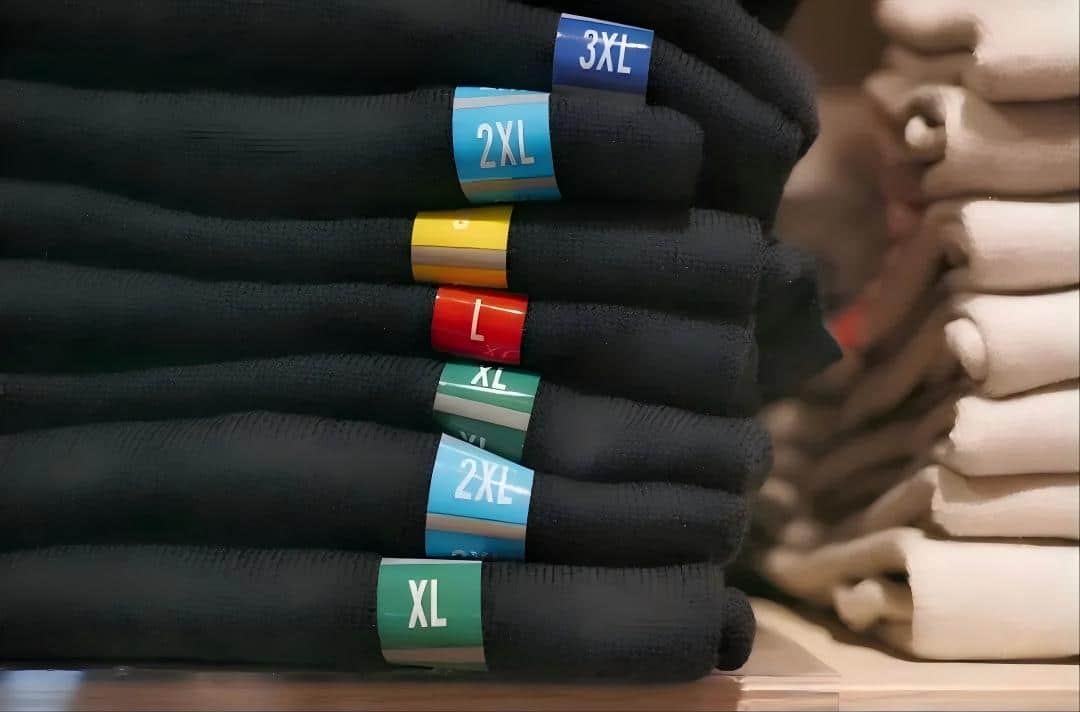
Many stores, complex SKU structures, and fast operating rhythms are common characteristics of footwear and apparel chain retailers.
For footwear and apparel brands with dozens or even hundreds of directly operated and franchised stores, merchandise management must handle multiple challenges at once: short selling windows for seasonal styles, complex size and color stocking structures, significant differences in consumer behavior across regions and channels, and replenishment and transfer decisions that occur far more frequently than manual processes can reasonably support.

The complexity of merchandise management has long exceeded what traditional manual work can effectively cover.
Many brands do not lack data. ERP systems hold years of historical sales data. BI reports are generated every day. Merchandise meetings never stop. But there is still an invisible gap between data and decisions: the data exists, yet decisions still depend on experience, meetings, and waiting.
That gap is the reality of merchandise management for many footwear and apparel brands today.
Why Decisions Remain Inaccurate Even When the Data Exists
On the surface, the problem appears to be execution: replenishment is slow, transfers are difficult, and information does not flow smoothly. But when we look deeper, the merchandise decision challenge is the result of several system-level problems layered together.
Allocation still relies heavily on experience, so the same errors repeat year after year. Size ratios, regional allocation, and channel distribution depend on individual judgment. Experience has value, but it is hard to replicate. When people leave, experience leaves with them, and the same allocation bias repeats season after season. Industry data suggests that more than 60% of inventory problems can be traced back to structural errors in initial allocation.
Replenishment that is one step too slow creates losses that are difficult to recover. The peak selling window for fast-moving styles is often only three to four weeks. In traditional workflows, it can take 7 to 15 days from store feedback on stockouts to product arrival. By the time inventory reaches the store, the peak has often passed, leaving discounting as the only way to clear remaining stock.
Transfers depend on coordination, so timing keeps slipping. Supply-demand mismatches such as Store A being overstocked while Store B is out of stock happen almost every season. But transfer cost is hard to quantify, decisions rely on multiple parties, and execution cycles are long. As a result, brands often miss the best window to rebalance inventory.
OTB management remains too rough, and brands only discover at the end of the season that they spent in the wrong places. Budgets are locked before the season, in-season reorders rely on gut feeling, and by season-end teams realize that the styles they should have chased were missed, while styles they should not have bought so deeply tied up a large amount of inventory capital.
These four problems point to the same root cause: the merchandise decision mechanism has not kept up with the speed of business change.
What 7thonline Helps Merchandise Teams Do
The core positioning is clear: let the system take over repetitive and rule-based work that can be handled by technology, and allow merchandise teams to focus their energy on the decisions that truly require experience and judgment.
Scenario 1 | Ordering and Allocation: From Experience-Driven Decisions to Structured Recommendations
During the buying season, merchandise teams typically need one to two weeks to organize data and build models. The quality of the conclusions often varies by person.
7thonline automatically integrates multiple signals, including historical sales, similar-style performance across seasons, regional demand structure, price bands, and channel distribution. It outputs an order quantity recommendation range for each style, along with key assumptions and risk alerts for the team to review and adjust.
The same applies to allocation. The system builds an independent sales capability model for each store. By combining historical sales rhythm, trade-area characteristics, and regional size preferences, it automatically generates allocation recommendations at the store × SKU × size level, replacing the traditional allocation method that relies heavily on individual memory.
The merchandise team’s focus shifts from building models from scratch to reviewing and making decisions based on system-generated recommendations. Order deviation can be reduced by an average of 30% to 50%, helping compress inventory buildup risk at the source.
Scenario 2 | Replenishment and Transfers: From After-the-Fact Response to Early Prediction
For replenishment, 7thonline uses weeks of supply, or WOS, as a trigger mechanism. It analyzes each store’s sales velocity and inventory depth in real time. When inventory approaches the safety threshold, the system pushes alerts 3 to 5 days before a stockout occurs, along with recommended replenishment quantities and priority rankings. Replenishment decisions shift from starting after a problem appears to intervening before the problem fully forms.
For transfers, the system scans inventory across all channels every day. It automatically identifies store combinations with supply-demand mismatches and combines logistics cost, remaining selling window, and expected incremental sell-through to estimate the expected return of each transfer recommendation. Merchandise teams receive an executable list of transfer recommendations to review, not raw data that still needs to be analyzed from scratch.
Industry data suggests that roughly 15% to 25% of overstock inventory in footwear and apparel has the potential to be cleared through cross-store transfers each season, while many brands achieve an actual transfer rate of less than 5%. The core reason for this gap is the lack of system support. Manual judgment is too costly and too infrequent.
Scenario 3 | OTB Management: From Pre-Season Lock-In to Weekly Dynamic Adjustment
Most brands have structural weaknesses in OTB management. Budgets are locked once before the season, with no mechanism for dynamic adjustment based on sales progress. Over time, budget flow becomes misaligned with business priorities.
7thonline connects OTB with real-time sales, inventory, and in-transit data, and automatically outputs three types of signals each week:
Chase signals: styles where sales exceed expectations, OTB remains available, and a reorder should be considered.
Reduction signals: styles where sales fall below expectations, in-transit orders may create inventory risk, and purchasing should be reduced.
Risk alerts: styles where in-transit orders clearly diverge from current sales trends and require immediate review.
OTB management moves from a one-time pre-season constraint to a rolling weekly decision tool, helping merchandise budgets continue to flow toward higher-certainty opportunities.
Scenario 4 | In-Season Monitoring: From Searching for Problems to Automatic Exception Alerts
In-season monitoring is often the most time-consuming and least efficient part of a merchandise team’s daily work. Large amounts of time are spent checking reports and comparing data. By the time a problem is found, the best action window has often narrowed.
7thonline automatically scans all active SKUs every day and identifies four types of issues: abnormal sell-through, inventory alerts, sell-through deviation, and slow-moving risk. The system does not only push exceptions. It also provides root-cause conclusions and generates action recommendations, which merchandise teams can review and confirm for execution.
By weeks 6 to 8 of the season, the system can identify potential slow movers early and recommend markdown timing windows. This shifts clearance from passive, concentrated end-of-season markdowns to proactive, phased in-season sell-down, helping reduce end-of-season discount depth.
What the Work Really Looks Like After the Shift
Replenishment decisions: In the past, once stores reported stockouts, teams had to check data one by one and complete the approval process. By the time goods reached the store, 10 days had often passed. Now, the system issues alerts three days in advance. Once confirmed, replenishment can be initiated the same day, significantly shortening the response cycle.
End-of-season clearance: In the past, brands passively relied on promotions to clear inventory at the end of the season, with discount depth increasing year after year and the same problems repeating every season. Now, the system identifies potential slow movers during the season and pushes action recommendations earlier, helping reduce end-of-season discount depth.
Daily meetings: In the past, a large share of meeting time was spent reconciling data, and less than one-third of the time was left for business judgment. Now, data integration and recommendation generation are handled by the system. Meetings focus on decisions that require human judgment, and the merchandise team’s role shifts from data preparation to decision-making.
In 7thonline’s work with footwear and apparel brands, we have found that as merchandise planning, allocation, replenishment, transfer, and OTB management become more system-driven, merchandise teams can free up more time from data preparation and exception checking, and redirect that time toward business analysis and merchandise strategy. For companies operating multiple brands and channels, this shift is often more valuable than simply adding more headcount.
Several Key Judgments for Upgrading Merchandise Decisions
Brands such as Patagonia, Calvin Klein, Canada Goose, and Birkenstock offer several useful lessons from their merchandise management upgrades:
Precise allocation is the starting point for cost reduction, not replenishment and transfer optimization. Every replenishment and transfer cost can be traced back to an allocation decision that has already happened. Improve allocation accuracy first, and the need for replenishment and transfers naturally shrinks. That is the correct path to cost improvement.
Validate the rules before automating them. Introducing automation before the rules are clear simply allows the system to execute the wrong logic more efficiently. A faster and steadier path is to validate and codify decision rules first, then hand them over to the system for execution.
Experience can be systematized, and knowledge should not live only in individual people. The style selection judgment of strong buyers and the market knowledge of regional managers are real competitive assets. By turning these insights into store profiles, size curves, and replenishment trigger rules inside the system, brands ensure that knowledge is retained at the organizational level instead of being lost when people move on.
The core competitiveness of merchandise management has never been about how fast teams can organize data. It is about market judgment, trend sensitivity, and the ability to turn business insight into accurate decisions.
What 7thonline does is use a system-driven approach to take over the work that can be standardized, rule-based, and automated, so merchandise teams can focus their energy where experience and judgment truly matter.
This is not only a change in how work gets done. It is also a repositioning of the professional value of the merchandise team.