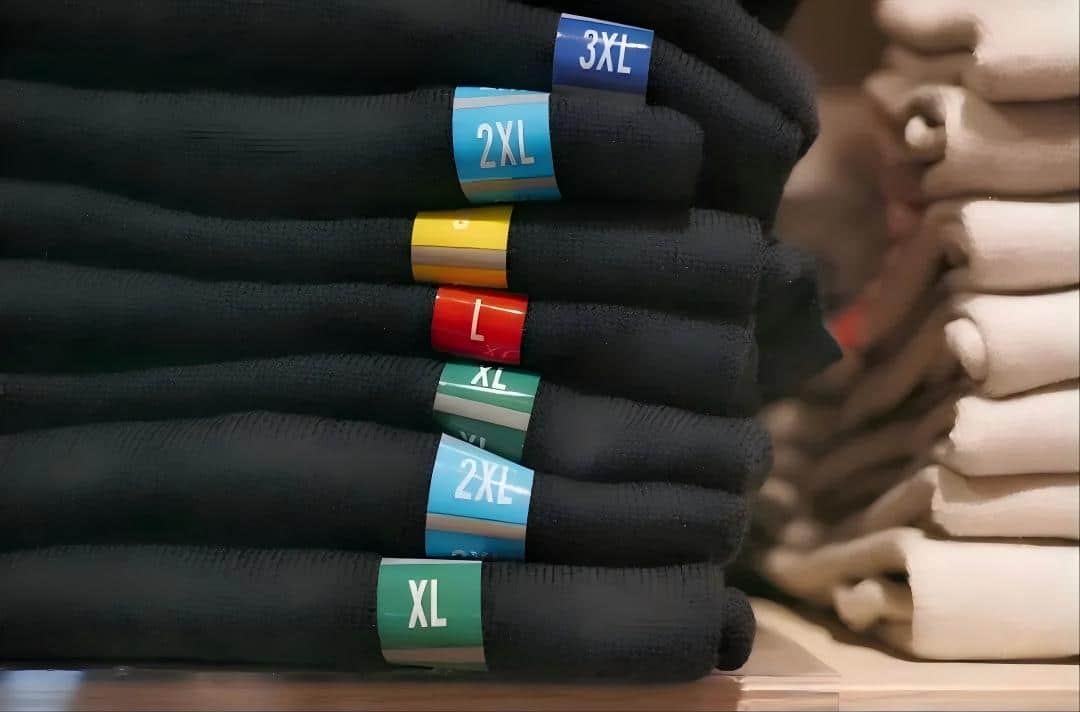
At every end-of-season inventory review, merchandise teams tend to feel the same pain: replenishment orders keep coming, transfer requests pile up in the inbox, the stores that need inventory do not have it, and the places that should not have inventory are sitting on too much of it. The team has been busy all season, but gross margin still comes in below expectations.
Many teams attribute the problem to slow replenishment, difficult transfers, or lack of channel cooperation. They work on improving approval workflows and shortening logistics lead times. These improvements have value, but they often treat symptoms rather than the root cause.
The real problem usually starts earlier: the initial allocation was not accurate.
Most transfers are essentially a remedy for failed initial allocation.
Faster replenishment does not necessarily mean stronger merchandise capabilities. It may simply mean the initial allocation was more wrong.
More transfer orders do not necessarily prove strong operational capability. They may indicate that the allocation system has been inaccurate for a long time.
Replenishment and transfers are, in essence, higher-cost ways of correcting the bias left behind by allocation. This article breaks down the full cost structure of allocation, replenishment, and transfer in footwear and apparel retail. It clarifies how each action erodes profit and explains how brands can systematically compress this hidden cost chain by improving allocation accuracy at the source.
1.Why Do Many Brands Have More Inventory Yet Still Run Out of Stock Every Day?
This is one of the most confusing and expensive paradoxes in footwear and apparel retail.
The root cause often begins at the buying stage. Most inventory issues are already embedded the moment the order is signed at the buying meeting. What styles to buy, how much to buy, and when products should arrive directly determine the health of inventory for the entire season. Allocation is the second layer of the problem. It can optimize how inventory is distributed across channels, but it cannot fix a total quantity or structural bias that was already created during buying.
The truly expensive problem is mismatched inventory. This is not inventory nobody wants. It is inventory that is needed somewhere else but cannot reach the customer because the buying structure or allocation decision was wrong.
The most expensive inventory in footwear and apparel retail is not excess inventory. It is mismatched inventory.
2.Allocation Bias: The Underestimated Starting Point of Profit Loss
Allocation in footwear and apparel retail is not simply a question of how much product to send to which store. One jacket with five colors and five sizes across 100 stores creates 2,500 inventory decision units. Every incorrect unit can trigger a chain of downstream costs.
Why Allocation Is Hard: It Is Not Just a Quantity Problem
The allocation complexity of the Chinese footwear and apparel market is high by global standards. Several structural factors overlap.
Significant body-type differences between northern and southern markets. Store customers in Northeast and North China tend to have larger average body profiles than customers in South China. For the same jacket, XL sizes in northern stores may sell more than twice as fast as in southern stores. Yet many brands still allocate with one standard ratio. The result: northern stores run out of 2XL, while southern stores clear 2XL through end-of-season markdowns.
Misaligned climate windows. A fall new arrival may need to be on the floor in Harbin in September, while Guangzhou may still be selling short sleeves in November. Many brands still follow one unified seasonal arrival rhythm. Northern stores receive product too late, while southern stores receive product too early and carry it for too long.
Channel attributes determine SKU structure needs. Flagship stores need full-color, full-size assortments for visual presentation. Community stores mainly serve local regular customers and only need core colors and key sizes. Outlet channels serve more price-sensitive customers and often show polarized size demand. A one-size-fits-all allocation logic inevitably creates slow movers in some channels and stockouts in others.
The Cost Structure of Allocation Bias
The cost of allocation bias is often spread invisibly across the season, making it difficult to attribute directly. It can be broken down into several types:
Size-break loss: fast-selling sizes run out, and full-price sales opportunities are permanently lost.
Markdown loss: mismatched inventory is forced into clearance, cutting gross margin sharply.
Capital lockup: incorrect inventory ties up cash flow and affects buying for the next season.
Management drain: teams spend large amounts of time on replenishment, transfers, and communication instead of focusing on higher-value business decisions.
3.The Cost of Replenishment: It Is Not Just Logistics
Replenishment is the first corrective action after allocation bias appears. It is also one of the merchandise management actions that consumes the most labor. But the true cost of replenishment is often seriously underestimated. Teams calculate freight costs, but miss opportunity cost, decision-delay cost, and supply chain friction.
The Three Hidden Costs of Replenishment
First: the opportunity cost of missing the selling window. A single footwear or apparel style often has a sales lifecycle of 6 to 10 weeks, and the true high-velocity selling period is usually concentrated in the first 4 weeks. By the time a store reports a stockout, the merchandise team confirms the issue, approvals are completed, and replenishment reaches the store, at least 10 days may have passed, and in some cases up to 3 weeks. This means replenished inventory often arrives after the highest-margin selling window has passed and must be sold at a discount.
Second: repeated cost caused by imprecise quantities. Replenishment quantity decisions often rely on manual judgment, and that judgment is based on sales reports that lag by 3 to 5 days. For fast-moving styles, replenishing too much creates overstock, while replenishing too little triggers another replenishment cycle. Many bestsellers go through 3 to 5 replenishment rounds. Each round carries logistics and approval costs, and each replenishment quantity is far smaller than the initial allocation. Unit replenishment cost can be 2 to 4 times higher than first allocation cost.
Third: replacement cost caused by limited supply chain flexibility. The domestic footwear and apparel supply chain is still largely built around bulk orders, and relatively few factories have true quick-response capability. When a bestseller needs a large chase order, brands usually face three choices: wait for the normal lead time, pay a quick-response premium, or use a similar but not identical substitute style. All three options carry costs, and none can fully make up for the initial allocation gap.
Fast replenishment is not as valuable as accurate allocation. Every chase order is a higher-cost way to buy a decision that could have been made correctly earlier.
Why Traditional Replenishment Mechanisms Are Losing Effectiveness
Many brands make replenishment decisions through monthly or biweekly merchandise meetings. This creates a natural lag between the appearance of a bestseller signal and the start of replenishment.
A typical traditional workflow is: stockout discovered → region reports it → regional team consolidates → headquarters merchandise meeting confirms → approval process → warehouse ships. The full chain takes 7 to 15 business days. For fast-moving styles, this can mean missing 30% to 50% of the peak selling period.
An effective replenishment mechanism uses weeks of supply, or WOS, as the trigger. When a store’s inventory for a SKU falls below “average daily sales × arrival lead time × 1.2,” the system automatically alerts the team and generates a replenishment recommendation. The decision chain can be compressed to 1 to 2 business days.
In actual implementation, 7thonline uses daily dynamic WOS calculations to continuously monitor inventory-to-sales ratio changes at the store × SKU level. Before inventory reaches the safety threshold, the system automatically generates replenishment alerts 3 to 5 days in advance, along with recommended quantities and priority rankings. More importantly, the system continuously evaluates whether a chase order is still economically worthwhile, not just whether the product is short. If the selling window is already too limited, a chase order may no longer make sense even if inventory is low. This is AI-driven business decision-making, not simple inventory alerting.
4.Transfers: The Highest-Cost Action and the One Most Often Delayed
Transfers have the highest execution cost, the most complex decision process, and the highest chance of delay among the three actions. Logistics cost, management cost, and time cost all stack up. As a result, many brands would rather launch a markdown than initiate a cross-region transfer, even when the supply-demand mismatch is obvious.
Why Transfers Are Harder to Execute Than They Look
Transfer cost is not transparent. The real cost of a cross-region transfer includes freight, inventory handling at the sending store such as repacking and relabeling, labor at the receiving store to put product back on the floor, and in-transit risk. These costs are spread across different departments and are difficult to fully calculate before making a decision.
Information asymmetry leads to conservative decisions. Merchandise teams often look at aggregated regional inventory, while store-level supply-demand mismatches are hidden inside the summary numbers. Information barriers between regions further amplify the problem.
The time window is short, but the decision chain is long. Same-day delivery is already common in many markets, so logistics speed is not the real bottleneck. The bottleneck is the decision chain: the merchandise team identifies a mismatch, evaluates the potential return, coordinates across departments, gets approval, communicates with stores, and ships. This process usually takes 5 to 15 business days. If the receiving store has only 6 weeks of selling window left, by the time the decision is made and the product arrives, the effective selling period may be only 4 to 5 weeks. If the decision is delayed by another round or two, the window becomes even tighter.
A Core Decision Framework: Is the Transfer Worth Doing?
Expected incremental sales benefit at Store B after transfer − logistics and management cost − gross margin that Store A could recover through markdown clearance. When this value is positive and above a certain threshold, the transfer has economic value.
Most brands do not have this calculation mechanism. They rely on experience instead. The result is that they either miss valuable transfer windows or execute transfers that are not economically worthwhile.
The essence of transfer is downstream correction of allocation bias.
Every valuable transfer corresponds to a structural allocation error that already happened.
When a brand creates more than 200 transfer orders per season, it does not mean the transfer capability is strong. It means the allocation system has a systemic problem.
In real implementation, 7thonline’s transfer module starts from a network-wide inventory view. It continuously scans supply and demand across all stores, automatically identifies mismatches such as “Store A has excess inventory of a SKU while Store B is short on the same SKU,” and calculates transfer return based on logistics cost, remaining selling windows at both stores, and expected incremental sell-through. It then outputs a prioritized recommendation list.
The key design is “make the return visible before making the decision.” Each transfer recommendation includes expected gross margin recovery and cost estimates, giving merchandise teams a clear numerical basis for review. The system does not only identify inventory mismatches. It calculates whether the transfer can still earn back profit.
Based on actual operating data, brands using system-generated transfer recommendations have seen the effective transfer ratio, defined as transfers that improve sell-through at the receiving store by more than 10 percentage points, increase from an industry average of 41% to 73%. At the same time, in-season transfer frequency declined by about 35% as initial allocation accuracy improved.
5.Many Brands Have Systems, but the Systems Still Run on Experience
Many brands have already launched allocation or replenishment systems. But the core logic inside these systems often simply copies the manual rules that used to live in Excel: allocate by store tier, set fixed size curves by region, set replenishment thresholds at 1.2 times safety stock. Once these parameters are set, they rarely adjust as seasons, regions, and categories change.
The system runs quickly, but it is still running the same ratios decided by gut feeling at last year’s buying meeting.
This type of system solves process automation. It turns manual approvals and spreadsheet work into system operations. It saves execution time, but not necessarily improves decision accuracy. The root causes of allocation bias, including unified ratios, fixed thresholds, and lagging data, are inherited unchanged by the system. In some cases, because “the system says so,” people become less willing to review the logic manually.
This is why many brands implement systems but see little improvement in allocation accuracy. The system replaces the hands, but not the brain.
6.Footwear and Apparel Retail Is Moving from Experience-Based Allocation to Data-Driven Decision Allocation
Allocation, replenishment, and transfer are often treated as three separate merchandise management actions, managed by different departments, systems, and rhythms. This fragmented approach can work when the business is small. But once a brand has more than 50 stores and more than 300 SKUs, management complexity grows exponentially.
The Cost Transmission Chain Across the Three Actions
Allocation bias creates replenishment demand. Imprecise replenishment creates another allocation bias. Overstocked items require transfers. Transfers consume logistics resources. Logistics congestion affects normal replenishment speed. This is a negative transmission chain. Once it starts, it keeps expanding during the season until it is finally released through discounts at season end.
The only effective point to break this negative chain is improving initial allocation accuracy.
7.Allocation, Replenishment, and Transfer Are Moving from Execution Tasks to an Operating Science
The footwear and apparel industry is undergoing deep change:
SKU counts are exploding.
Small-batch quick response is becoming normal.
Channels are increasingly fragmented, including Douyin commerce, outlets, membership stores, community stores, and more.
Regional climate and consumer habit differences continue to widen.
These changes point to one conclusion: traditional experience-based allocation is beginning to fail.
In the past, an experienced merchandise manager could achieve 60% to 70% allocation accuracy based on intuition. Today, with 500 stores, thousands of SKUs, weekly changes in weather and traffic, the human brain can no longer process that many variables at the same time.
Allocation, replenishment, and transfer are becoming an operating science, not just execution tasks.
7thonline’s allocation, replenishment, and transfer solution is designed around one principle: get allocation right first. It brings computing power forward into the allocation decision stage:
Use store profiles, including size preference curves, category sell-through rhythm, average transaction price distribution, and regional climate cycles, to drive allocation structure down to the store × SKU × size level.
Use sales velocity to dynamically trigger replenishment alerts and determine whether a chase order is still worth placing.
Use return calculations to support transfer decisions instead of relying on experience-based calls.
These three actions operate within the same data framework, making each replenishment and transfer closer to the last correction needed, rather than the starting point of the next bias.
The System Is Not Replacing People’s Actions. It Is Supporting Business Judgment.
Many brands appear to be running refined operations, but in reality they are frequently filling gaps.
Profit loss from allocation, replenishment, and transfer is a long-standing structural issue in footwear and apparel retail. The more complex the market and the more diverse the channels, the stronger the amplification effect becomes. Expecting to solve the root problem by optimizing replenishment approvals or shortening logistics lead times is like fixing a downstream leak while ignoring the upstream break.
Advanced merchandise operations are not about replenishing faster or transferring more often. They are about allocating correctly the first time.
If you would like to evaluate the cost loss in your current allocation, replenishment, and transfer system, or understand how 7thonline can be implemented in specific scenarios, please contact us.