How Retailers Can Spot Fake AI

Everyone is talking about artificial intelligence and its benefits, but not everything labeled as AI is actually AI. Some companies are slapping that AI label on technology that’s nothing more than a self-contained module that gathers data without providing any true analysis.

For retailers, tapping into real AI rather than fake AI can make all the difference in sell-through rates and inventory levels.

ai powered forecasting and graphs

Download our whitepaper to learn what retailers need to know about fake AI and how to spot it: https://www.7thonline.com/fake-ai-and-real-ai-in-retail-whitepaper

Fake AI is an island

Fake AI is merely an island consisting of a single data set that’s not connected to other data sets. As a result, it can’t provide the complete analysis necessary to gain a true picture of your retail operations. On the other hand, real AI platforms tap into multiple data sets and are capable of analyzing those data sets cohesively, providing the information retailers need to accurately predict how much product in what sizes and colors they will need in each store.

This is where a discussion of terms like “AI module” and “AI native” comes in. AI module implies that the systems, products or services function with AI, but AI isn’t intrinsically tied to the basic function. AI modules use the technology to add features or capabilities and enhance the user experience, similar to how smartphones incorporate AI cameras to improve photography with their devices.

However, AI-native platforms put the technology at the core of product development, decision making or business processes. Instead of AI being simply an add-on technology, it’s a primary, foundational component of the platform. AI-native platforms have the technology as a central element that drives value from their very foundation.

How to spot fake AI

The easiest way to spot fake AI is to notice nuances in the terms used; unfortunately, it’s not always that easy. Sometimes you may have to dig into the technology and gain a better understanding of how it works in order to spot fake AI.

An important sign of fake AI is the use of individual modules, which create islands in the data — islands that can’t communicate with each other because AI is not the central component tying them together. AI modules require scientists to analyze the results of the data gathered. Thus, they are cumbersome and make it impossible for retailers to successfully leverage the results of any information gathered from the AI module.

Another red flag can be the use of the term “forecasting module.” This type of module provides information side by side, similar to a copy/paste of information. Again, use of a module results in an AI island where the information isn’t seamlessly incorporated throughout the system.

It takes very little time to build an AI module, but to embed AI into an entire platform is like inserting it into the platform’s DNA. Like the cells in our body, each AI cell has a different purpose and is integrated into every component of the platform, built into every single feature.

Real AI for retailers at work

Believe it or not, up to 60% of retail merchandise ends up sitting on the shelf or gets stocked out due to poor assortment accuracy. Real AI provides much greater accuracy and becomes better over time with more data and adjustments made by people who understand the nuances of their industry.

For example, size profile is critical in assortment planning, allocation and replenishment. When building an assortment plan, the last step involves determining the size quantities. You need to have the right size distribution to keep products from sitting on the shelves for too long or selling out too quickly.

True AI will continuously fine-tune every store location for every product category, determining the ideal size curve each store should carry, and then applies that to the retailer’s style-color-base assortment plan to get down to the style, color, size and purchase order. True AI based size profiling is embedded in pre-season assortment creation and store allocation recommendations.

Another example of true AI at work is in the open-to-buy analysis, which predicts when retailers will run out of stock. This is a form of forecasting, but it isn’t just a module providing side-by-side information. It’s real analysis from an AI that has access to the entire library of information.

When AI works

With all the marketing around AI right now, it’s important to mention that when AI works, users don’t really need to know. They’ll just use the platform and over time, gradually realize that the data it provides is highly accurate. On the other hand, AI modules will generate loads of information that requires you to analyze it yourself, potentially leading to disaster if you misinterpret that data. Real AI is like the brain running in the background of the platform. It just works without any fuss or need to emphasize that AI is involved.

Read the original article on The AI Journal here.

To learn more about our AI-native inventory management and demand planning solutions for retailers and wholesalers, email us at info@7thonline.com or book a demo with our team.

Ellassay Joins the Era of Smart Product Management

Luxury Chinese powerhouse Ellassay partners with 7thonline to usher in a new era of smart product management—furthering their commitment to provide high-quality shopping experiences through elegance, fashion and intelligence. With a keen eye for innovation and a steady pulse on trends, the industry leader chose 7thonline to strengthen their position in the market and maintain their forward-thinking vision. 

“We believe that through cooperation with 7thonline, Ellassay will further enhance its brand competitiveness and bring consumers a better fashion experience.” – Xia Guoxin, Ellassay Chairman

The China-based brand has a diverse matrix of sub-brands, including Ed Hardy, IRO Paris, self-portrait and more, covering design, manufacturing, retail and distribution of women’s fashion around the world. Seeking digital transformation, the team made the decision to search for an inventory management solution that would help them address growing consumer needs. The conclusion to go with 7thonline was rooted in the platform’s collaborative capabilities, value creation, ease of implementation and industry expertise.

A pioneer in AI-based inventory management and supply chain optimization, 7thonline has been transforming the retail industry for 25+ years—serving internationally renowned brands such as Patagonia, Calvin Klein, Birkenstock and beyond. Powered with advanced industry-specific algorithms, refined through continuous client collaboration, the end-to-end solution breaks down information silos, fosters cross-functional collaboration and empowers real-time decision making. 

This partnership between Ellassay and 7thonline continues to signal the importance of data visibility and demand insights for leading retailers. Using machine learning for big data analysis and cutting-edge AI technology, 7thonline will enable Ellassay to accurately predict sales trends, optimize inventory productivity and reduce operational inefficiencies. 

We are proud to welcome Ellassay!

7thonline is a leading provider of retail assortment management applications, enabling more effective planning, demand forecasting and inventory optimization. To learn more, email us at info@7thonline.com or book a demo with our team.

The Next Evolution in Retail Inventory Management Needs to Break Down Silos

The retail industry has been struggling for years, even decades with a major challenge—the siloed nature of operations. Traditionally, sales, supply chain and production functions have worked in isolation, leading to inefficiencies, misaligned processes and missed opportunities for growth. It also affects employee morale and their ability to focus on important tasks. These disconnected systems result in inventory imbalances, production delays and a lack of visibility across operations.

At the same time, a significant opportunity is emerging. Integrated demand, the use of artificial intelligence and machine learning and inventory planning systems are redefining how businesses approach operations. By breaking down traditional silos, these systems enable seamless collaboration between teams, fostering smarter decision-making and streamlined processes.

The critical question for businesses now is, how can they bridge the gap between forecasting demand and aligning production with real-time collaboration? Solving this challenge requires advanced tools and a shift in mindset. Retailers need to view the supply chain, demand planning and production as interconnected pieces of a larger, unified strategy.

A Look at the Data: Retail Silos

Silos can be the most costly problems in today’s market. For example, Nike reported holding $9.7 billion in excess inventory in late 2022. That’s an increase of 44% from the previous year and a staggering figure demonstrating just how tough inventory management can be for one of the biggest brands.

Most of us know the results. By 2023 Nike announced an aggressive $2 billion cost-cutting program and employee layoffs. The stock plummeted 12% in a single day following these measures, and gross margins dropped from 45.9% to 42.9% year-over-year. Current global estimates reveal that the global retail industry loses approximately $1.75 trillion annually due to out-of-stock items, representing about 8.3% of total retail sales.

The Evolution of Inventory Management from Sales Planning to Production

Traditionally, inventory management has centered around sales planning and revenue forecasting, with businesses striving to predict how much product they could sell and where those sales would occur. While these projections provided valuable insights, they often stopped short of addressing the next critical step: translating forecasts into actionable production plans. This gap left supply chain and production teams scrambling to meet demand, resulting in inefficiencies, inventory surpluses or shortages that impacted profitability and customer satisfaction.

Key Features of Modern Solutions

Modern inventory management solutions are designed to address the needs of today’s dynamic retail environment with a range of advanced features. Global functionality enables businesses to operate seamlessly across multiple currencies and locations, making these tools scalable for both small retailers and multinational enterprises.

Comprehensive planning tools provide end-to-end support, from pre-planning activities like forecasting revenue and demand to post-planning tasks such as determining production needs and allocation resources. Real-time insights further enhance decision-making by offering a clear view of inventory flow and ensuring alignment with overarching business goals. Together, these features empower retailers to streamline operations, optimize resources and respond quickly to market demands.

Solving Problems Holistically by Focusing on Upstream vs. Downstream

Effective inventory management requires a holistic approach that bridges upstream expertise with downstream integration. Upstream capabilities—such as long-term demand forecasting—enable businesses to anticipate production needs and align them with raw material and resource planning. This foresight helps prevent supply chain disruptions and ensures production efficiency. On the other hand, downstream tools focus on managing in-season inventory and making real-time production adjustments to meet evolving consumer demands. By seamlessly connecting these two ends of the inventory lifecycle, modern solutions provide businesses with a unified system that minimizes inefficiencies, reduces waste and ensures optimal stock levels. In this industry, we know that success means that there is only one item left by the end of the selling season. 

Differentiating Factors in the Market

Flexibility and complexity have become essential in inventory management solutions. Modern systems stand out by offering the ability to adapt to the unique needs of businesses, whether they are small retailers or global enterprises. Customizable solutions allow companies to address specific challenges within their supply chains, sales planning and production processes, providing a significant edge in meeting market demands. This level of adaptability ensures that businesses can scale and pivot quickly, staying ahead in an increasingly fast-paced environment.

Equally important is the value of long-term expertise. Many legacy systems, once focused solely on sales or demand forecasting, have evolved to integrate comprehensive solutions that address both upstream and downstream processes. These platforms leverage decades of industry knowledge while incorporating modern technology—such as real-time data analytics and artificial intelligence-driven insights—to deliver more robust and efficient planning tools.

The Future of Retail Operations

The future of retail operations lies in extending planning horizons to anticipate shifts in consumer behavior before they occur. By leveraging advanced forecasting tools, businesses can move beyond short-term planning and prepare for long-term trends, ensuring they stay ahead of customer expectations and market demands. This forward-thinking approach minimizes disruptions and creates opportunities for growth. It gives us time to think and use the profits saved by using new technologies to future invest in platforms that make an impact. 

Read the original article on Fashion Mannuscript here.

To learn more about breaking down silos and improving retail operational efficiency, email us at info@7thonline.com or book a demo with our team.

Supply Chain Forecasting Software: Bridge Sales Forecasting to Supply Chain Execution

How much inventory needs to be purchased? What resources and raw materials are required for production? How can supply chain operations align more efficiently with demand forecasts? Supply chain forecasting software can help answer these questions.

sales forecasting with a futuristic report hovering over a keyboard

Backed by more than 25 years of upstream planning, 7thonline has expanded its focus to address production demand planning—transforming its platform into a comprehensive global inventory management solution. By blurring the lines between wholesale, direct-to-consumer and digital operations, 7thonline empowers businesses of all sizes, from small retailers to multinational enterprises, to optimize inventory flow and maximize profitability.

The company said its next-generation approach integrates demand and supply data, enabling corporate offices to gain real-time visibility into inventory movements across all locations and ensuring a smooth transition into supply chain planning. The launch of these solutions comes at a time when retailers and brands are managing a more complex business that stretches across multiple channels and consumer touchpoints.

“Retail operations have historically operated in silos, with limited communication between supply and demand teams. We’re breaking down those barriers. Our enhanced platform fosters collaboration between departments, streamlining processes and ensuring that inventory decisions align with real-time business needs.” – Max Ma, CEO 7thonline

The benefits of the company’s solutions include offering brands and retailers extended forecasting horizons, which allows demand planning teams to forecast further out, which reduces production bottlenecks. The platform not only handles upstream planning with precision but now seamlessly connects to downstream operations, solving problems across the inventory lifecycle, better integrating upstream and downstream processes.

In addition, the platform allows corporate-level decision-makers to monitor and manage inventory flows across all locations, ensuring alignment with overarching goals. While competitors focus narrowly on in-season demand planning or downstream solutions, 7thonline stands out as an end-to-end platform with unmatched expertise in upstream planning. “For 25 years, we’ve mastered the complexities of upstream planning,” Ma said. “Now we’re going downstream to help our customers solve problems holistically, making us the only solution that seamlessly integrates both ends of the planning process.”

To read the full article on WWD, click here.

Learn more about the latest in supply chain forecasting technology and inventory management solutions, email us at info@7thonline.com or book a demo with our team.

Unleashing Wholesale Tech that Embraces Real-Time Data, Removes Silos and Avoids Costly Mistakes

Many wholesalers may not realize that challenges in the technology they’re using come from using tools that are not specifically designed for their wholesale business model. The first, and biggest challenge is with Excel, a platform that has no standard practices across multiple accounts, is extremely tedious and time-consuming and is prone to errors. The second challenge is when wholesalers make the leap to a new platform, only to find out that what appears to be an effective solution on the surface has hidden roadblocks because the tool was actually built for retailers. 

By making the shift to tools specifically designed for wholesale operations, businesses can gain better visibility, more accurate forecasting and the ability to streamline their processes. Wholesalers will also be in the position to get out of “Excel hell” and leverage real-time data, remove silos across departments, enjoy better planning and increase sales by understanding what sells and what doesn’t.

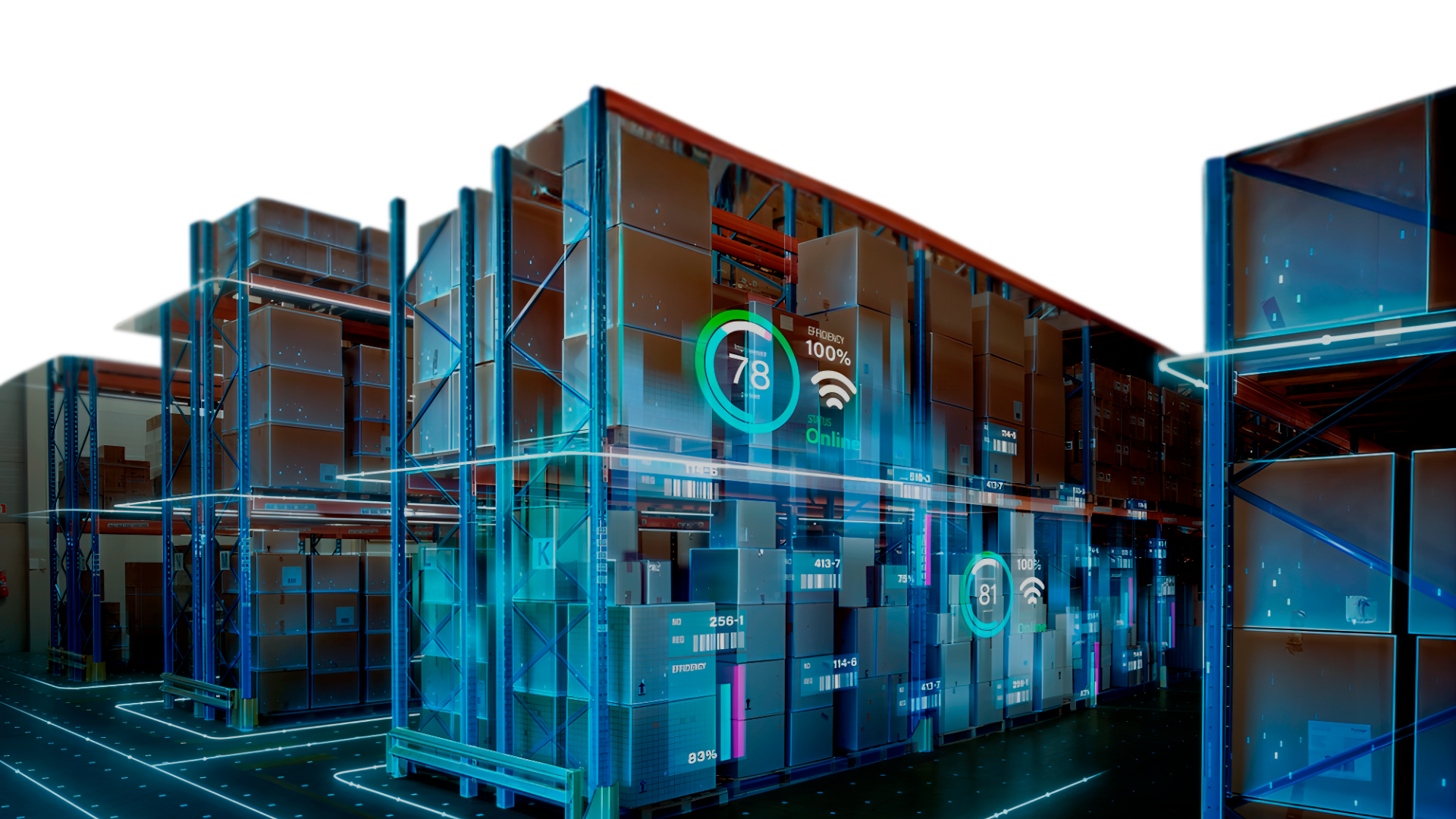
employee in a tech-forward warehouse

It’s Time to Ditch Excel for Critical Wholesale Operations

Many wholesalers still rely on Excel to manage critical operations like account planning, inventory tracking, production schedules and sales data. While Excel might seem like a flexible tool, it often leads to data silos where different departments are working with outdated or incomplete information. Spreadsheets are prone to manual errors, such as incorrect formulas or misentered data–which can result in costly mistakes. Excel doesn’t provide the big-picture view needed to make quick, data-driven decisions. 

Take for example a wholesaler managing multiple accounts. If the account management tool isn’t linked to the production system, key information, like sudden changes in order size or delivery timelines don’t get communicated efficiently, resulting in misaligned expectations, late deliveries and frustrated clients

In contrast, adopting real-time data tools give wholesalers a single source of truth that enables faster, smarter decision making. Real-time systems provide up-to-the-minute insights on inventory levels, order status and production progress, allowing teams to react to changes instantly. If a sudden increase in orders occurs, real-time data allows production to ramp up immediately, ensuring the business can meet demand without delays.

Wholesale Tech Platforms Reveal Meaningful Data that Drives Profits

Wholesalers operate in a fundamentally different space from retailers. This area of retail needs a system that helps manage production timelines, track multiple accounts and fulfills complex bulk orders. They rely on tools that can track production schedules across various manufacturers, allowing them to potentially help retailers bring goods to market earlier, provide insights into items that will have higher sell-throughs and potentially increase orders of items that have sold well. Wholesalers need tools that have the sophistication to handle large, multi-location warehouses, seasonal inventory cycles or forecasting based on bulk orders. Excel certainly won’t help effectively avoid missed opportunities to optimize order fulfillment and doesn’t provide real-time data or the ability to understand where pockets of opportunity to save time and money can be found.

Even other types of retail systems that are not designed specifically for wholesale end up prioritizing individual sales, consumer behavior and small-batch inventory management. These tasks don’t translate well to the wholesale environment.

Meaningful Outcomes that Avoid Common Pitfalls

One of the most significant advantages of using a platform designed specifically for wholesalers is accurate forecasting for production buys. Wholesale businesses often deal with large quantities and longer lead times, so having tools that can analyze bulk order trends and predict future demand is essential.

For example, a wholesaler supplying clothing to large retailers can use wholesale-specific forecasting tools to determine how much fabric to order for production months in advance, ensuring they meet demand without overcommitting to resources. These tools help avoid common pitfalls such as underbuying, which leads to stock shortages, or overbuying, which results in excess inventory that ties up capital.

Another key benefit is the ability to improve order fill rates with tools that are designed to track and optimize the entire order process. These systems allow wholesalers to manage bulk orders, ensure timely production and coordinate shipping schedules effectively. This leads to better fill rates, meaning that orders are fulfilled accurately and on time.

Wholesale tools also emphasize account planning rather than location-level planning and allows businesses to track the specific needs of each account, such as seasonal buying patterns or bulk order preferences and tailor their production accordingly.

A Unified Source of Truth by Connecting Inventory, Production, Sales and Accounting

For wholesalers, full system integration is the cornerstone of efficient and effective operations. When all systems, including inventory, production, sales and accounting are connected, the data becomes a single, unified source of truth. Instead of departments working in isolation, everyone has access to real-time, cohesive information that reflects the current state of the business.

When a sales team enters a new order, that information immediately updates inventory and production systems, ensuring everyone is aligned. This eliminates the need for manual data transfers or constant back-and-forth communication, reducing errors and preventing miscommunication.

When systems are fully integrated, wholesalers gain control over their operations. For wholesalers, integration isn’t just an upgrade. It’s the difference between chaos and control. 


Read the original article on Fashion Mannuscript here.

To learn more about our AI-based wholesale solutions, email us at info@7thonline.com or book a demo with our team.

How AI in Retail Is Enhancing Efficiency, Freeing Retailers From ‘Excel Hell’

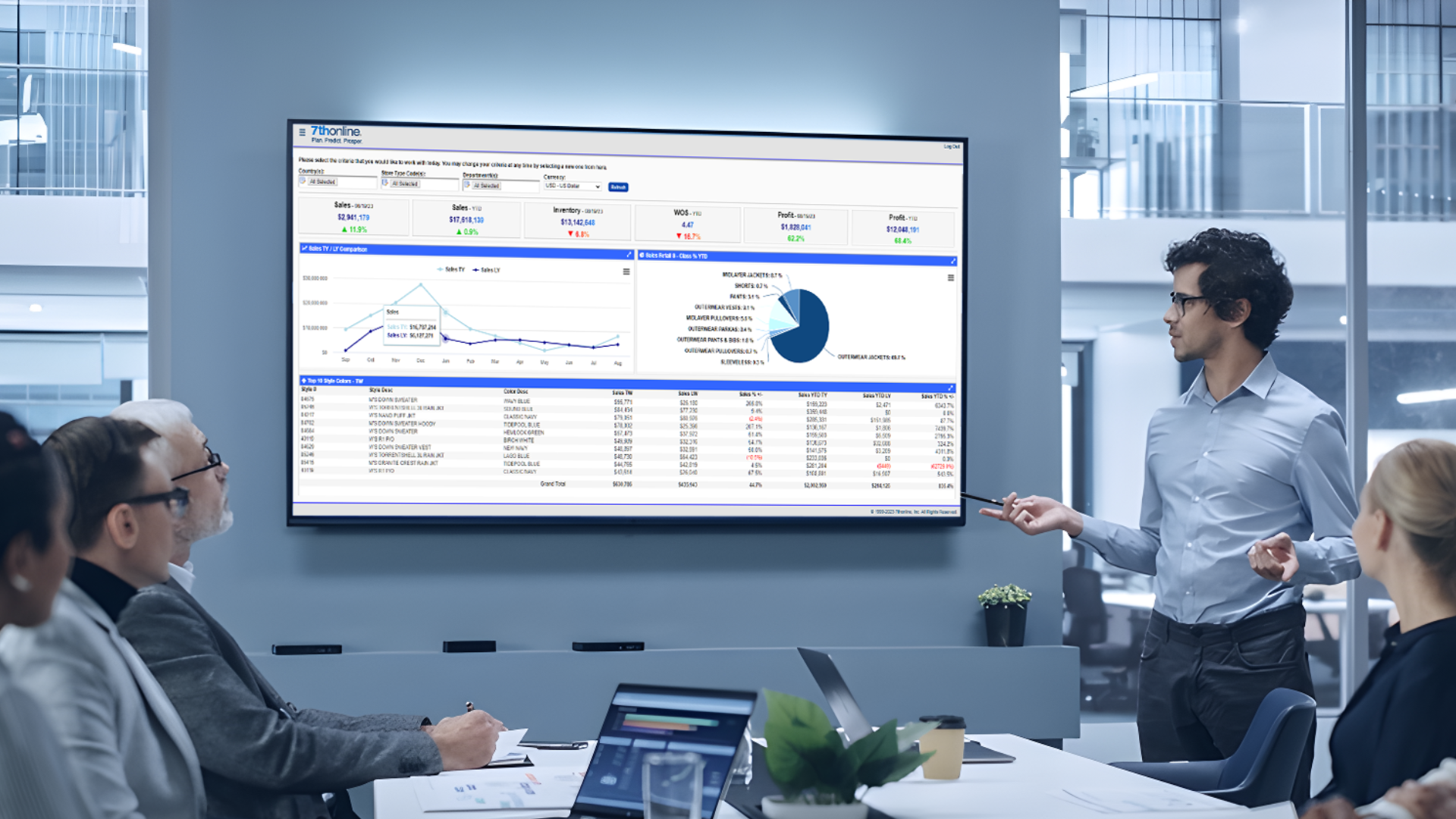
7thonline sat with WWD to discuss how AI in retail is enhancing efficiency, highlighting the company’s commitment to breaking down operational silos and enhancing efficiency across the board, ensuring tailored and flexible solutions that meet diverse client demands.

7thonline's demand forecasting platform shown in a business meeting

Since its inception, 7thonline has worked to revolutionize the retail and wholesale industry by integrating advanced data science with more than 25 years of business acumen. Today, 7thonline is committed to helping the retail industry move away from relying so heavily on manual processes to embracing technologies like machine learning and AI that can boost productivity and enhance profitability. The company has catapulted from a start-up focused on wholesale buying and planning tools to a global leader providing omnichannel merchandise solutions. With a client list including brands such as Patagonia and Calvin Klein, 7thonline maintains its competitive edge by fostering innovation and adapting swiftly to industry changes.

Here, Max Ma, chief executive officer, and Lauren Taubes, director of business development, reveal how cutting-edge retail tech can free retailers from “Excel Hell”.

WWD: 7thonline offers a unique suite of solutions for omnichannel merchandise and assortment planning. How do you maintain your competitive edge in such a dynamic industry?

Max Ma.: We always have the opportunity to collaborate with “best in class” brands that set the industry standard for best practices. We’ve had the privilege to collaborate with some of the best retail brands, like Patagonia, Birkenstock, Calvin Klein, Canada Goose, Bestseller, among others.

It is important to constantly ask ourselves: Are we on the right track? Are we approaching this the best way? We have a passion for the fashion and retail industry that fuels our innovation. Our team is composed of data scientists and former retail executives with extensive experience and this combination gives us insights into the problems our clients are facing and the data needed for the solution. We are able to do this by creating an industry specific platform that uses AI and machine learning to revolutionize merchandise planning and allocation and drives profitability.

Lauren Taubes: There are many retail technology companies out there and some offer services that are similar to 7thonline. But we are exceptional that we are able to integrate with technologies that clients already have and that we provide unique solutions for wholesalers that are breaking down silos and fostering more effective collaboration across the organization.

WWD: 7thonline serves global clients across various regions. Can you discuss any challenges you face while catering to such a diverse clientele and how you overcome them?

L.T.: Serving a global clientele, we see several challenges, primarily around inventory cycles and demand patterns. Each market has unique trends and seasonality, so a one-size-fits-all solution simply doesn’t work. To overcome this, we’ve built our platform to be highly flexible and adaptable, allowing clients to tailor planning and forecasting based on local data.

Additionally, global clients often face logistical and regulatory complexities. To address these, we provide real-time insights and AI-driven recommendations based on their history. This enables clients to make more accurate decisions. We also work closely with leadership to fine-tune our solutions. We want to make sure that we are in alignment with each client’s specific needs.

WWD: How does 7thonline ensure its solutions cater to both well-established brands and emerging players in the industry?

L.T.: By offering a modular, integrated approach, 7thonline helps both established and emerging brands improve speed to market, planning accuracy and greater profitability. Our tools enable businesses to adapt quickly to changing market demands by truly using the data the companies have but do not use effectively.

We offer a flexible, data-driven platform tailored to the fashion and footwear industry, supporting top brands like PVH, Patagonia, Birkenstock, Michael Kors and Canada Goose across both retail and wholesale models. Our platform provides granular, real-time demand insights, down to the SKU level at each store location for each selling week, helping businesses align inventory with localized demand and maximize productivity.

With solutions like merchandise planning, open-to-buy (OTB), pre-season assortment planning and built-in analytics, we enable smarter decision-making. Our tools streamline production forecasts, optimize allocation and replenishment and enhance supply chain efficiency, ensuring products reach the most profitable channels.

WWD: Customer success stories are very powerful. Could you share a specific case where 7thonline significantly impacted a client’s business outcomes?

M.M.: Recently, one large conglomerate that we work with reported that by utilizing a wholesale account planning system, they were able to place their production orders a week earlier. This was due to better planning and led to a $1 cost reduction per garment from their supplier. This is a notable savings in the retail industry.

WWD: How important is data security to 7thonline, especially when dealing with sensitive client information in the digital age?

M.M.: In our 25 years of business we have not had a data breach. Data security is extremely important to us, especially given the sensitive nature of client information and the current digital landscape. We are committed to safeguarding our clients’ data through robust security measures and industry best practices. Our cloud-native SaaS solutions are designed with advanced security protocols to protect against unauthorized access and data breaches. We are continuously updating our security frameworks to ensure that client information remains confidential and secure.

WWD: Can you describe any upcoming features or products that 7thonline is excited about rolling out?

L.T.: Here’s another reason why working with “best in class” industry leaders makes a difference. It allows us to develop products that meet their exact needs. For example, we are rolling out several new features designed to enhance both DTC and wholesale operations. For clients, we are expanding our item level planning that integrates sales planning with inventory management. This enhanced tool will provide detailed open-to-buy (OTB) and item level planning.

The benefit is that it will enable brands to track all key performance indicators (KPIs), including on-hand inventory, receipts, sales and transfers at both the distribution center and store level on a monthly basis. Another benefit is this provides real-time collaboration between the sales planning and inventory team so that there will be no more silos between planning and execution. To continue on the path, we are working with a major footwear brand to expand into production planning. This will help us to close the loop of the retail/inventory/planning/execution cycle.

WWD: What are some of the long-term goals for 7thonline, and what strategies are in place to achieve them?

M.M.: Looking ahead, 7thonline aims to eliminate inefficiencies caused by outdated tools like Excel. I like to call it “Excel Hell” because it’s frustrating, time consuming and full of inaccuracies. The biggest offense is that it creates data silos and slow real-time decision-making. As margins shrink, manual processes become unsustainable. The future is about delivering automated, end-to-end solutions that streamline operations and improve results, removing the need for manual inputting.

Embracing AI in Retail

Known as the “science guys of the retail industry,” we’re advancing AI and machine learning through collaboration with leading clients. It’s no secret that AI is part of the future and is transforming buyers’ roles, enabling smarter, real-time adjustments to product assortments, especially for seasonal items. Studies show 60 percent of pre-season purchases are unprofitable due to decisions made without real-time data. By leveraging AI, retailers can respond to consumer behavior mid-season, improving profitability.

Our strategy for the future is to embrace AI and the crucial edge it provides by predicting trends early, reducing reliance on pre-season guesses and enhancing margins, allowing retailers to reinvest in technology and stay ahead.

To read the full article on WWD, click here.

To learn more about the latest in AI for retail demand planning and inventory management, email us at info@7thonline.com or book a demo with our team.

Minimize Markdown Items by 30% Through Smart Allocation and Planning

According to Bain & Co.’s 2024 Consumer Products Report, the industry is grappling with slowing growth and increasing pressures from both the global market and evolving consumer expectations. To remain competitive, companies are being urged to reset their growth strategies, emphasizing sustainable innovation, digital transformation and operational agility. Businesses must adapt to disruptions in the supply chain and shifts in consumer behavior, positioning themselves to seize emerging opportunities while maintaining a focus on long-term objectives.

While it might be perceived as a Herculean feat, reducing markdowns by 30% can be a game-changer for retailers looking to optimize profitability, and smart allocation and planning are key to making it happen. By strategically aligning inventory with customer demand through the use of advanced data analytics, retailers can minimize excess stock and lost sales, reduce markdowns and increase full-price sales. But how can retailers effectively forecast and manage inventory across diverse product categories?

A Focus on Breaking Down Silos

The answer is by facilitating real-time Sales & Operations Planning (S&OP) and enabling better collaboration between sales planning and supply chain planning teams–breaking down silos and fostering more effective collaboration across the organization. This is best done with an industry specific platform that uses AI and machine learning to revolutionize merchandise planning and allocation, and drives profitability. Once retailers and wholesalers are able to move away from manual processes like Excel, holistic approaches that use AI and machine learning are able to provide granular consumer demand insights. Today, the capability exists to dig right down to the SKU (stock keeping unit) at a specific store for a given week. This level of detail allows retailers to make smarter, faster inventory decisions based on real-time, localized demand. 

In addition, AI-driven systems can accurately forecast demand, ensuring optimal stock levels and minimizing the risk of overstocking or stockouts by analyzing real-time sales data, customer behavior and market trends. This advanced technology enables dynamic, data-informed allocation, helping businesses meet customer demand while significantly reducing markdowns and improving profitability across various product categories. 

Delivering Real Results Through Smart Allocation and Planning

Clients have experienced firsthand the significant benefits of using these solutions. For example, one large conglomerate reported that by utilizing a wholesale account planning system, they were able to place their production orders a week earlier, leading to a $1/garment cost reduction form their supplier–a notable savings in the retail industry. 

7thonline clients have gained increased visibility across multiple continents, allowing them to track local demand in various countries and regions. This ensures that headquarters can stay ahead of demand signals across the entire organization. By breaking down data silos, companies are empowered to use their data to make meaningful improvements in both operations and profitability. 

Streamlined Stock Management for Optimal Performance

By integrating demand-driven allocations, tailored strategies based on product attributes and real-time replenishment tools, retailers can significantly enhance their inventory management processes. Balancing push and pull methods, alongside quick reorder algorithms, ensures that stock levels remain responsive to changing demand, reducing the risk of overstock or stockouts. This holistic approach not only improves customer satisfaction by keeping popular items in stock, but also enhances overall profitability through better resource management. 

Demand-Driven Allocation for Maximum Sales Potential

Effective allocation and replenishment systems are critical for maximizing product sales and reducing inefficiencies. Demand-driven approaches focus on distributing inventory based on which products have the highest propensity to sell. By analyzing consumer behavior and sales trends, retailers can ensure that the right products are placed in the right location, optimizing the chances of meeting customer demand. This method not only improves stock availability but also minimizes the risk of overstocking less popular items. 

Tailored Allocation Based on Fashion, Season and Attributes

To enhance inventory accuracy, optimal allocation methods are tailored to consider fashion, seasonal trends and basic product attributes. This ensures that products are aligned with local market preferences and timely demand changes. For instance, fast fashion items may require more dynamic allocation based on emerging trends, while basic or staple items can be managed with steadier forecasts. Retailers benefit from a balanced approach that meets both store-term trends and long-term needs.

Actionable Insights for Pre-and-Post-Allocation Adjustments

A comprehensive allocation system provides recommendations not just before, but also after allocation, allowing retailers to fine-tune their strategies. Pre-allocation recommendations help in distributing inventory proactively, whole post-allocation feedback allows businesses to adjust stock levels based on real-time sales data. This continuous cycle of adjustments ensures that inventory levels remain optimal across different locations. 

Technology’s Promising Future for Enhanced Profitability and Quality of Life

AI is reshaping the role of buyers, allowing them to stay ahead of trends and introduce product assortments that align with customer demand, particularly for seasonal items. According to a study published by Forbes, 60% of apparel products bought by buyers aren’t profitable, while only 40% are. This is because many decisions are made pre-season, long before customers interact with the products. AI enables retailers to gauge consumer behavior at the start of the selling season and make smarter, secondary product assortment allocations based on real-time data. Ultimately, retailers and wholesalers that are able to embrace AI and machine learning will be better able to minimize markdowns, increase profitability and ultimately enhance the quality of life for the stakeholders of the entire retail supply chain.

Read the original article on Fashion Mannuscript here.

To learn more about our AI-based smart allocation and demand planning tool for retailers and wholesalers, email us at info@7thonline.com or book a demo with our team.

Insights from Max Ma: Retail SaaS & Innovation in the Industry

Max Ma, CEO and Founder of 7thonline, shares insights into his journey from a retail software engineer to leading a successful retail SaaS company. Max founded 7thonline in 1999 with the vision of improving retail inventory management and demand planning, leveraging advanced analytics and data-driven solutions. The company has grown to serve major fashion, footwear and accessories brands like PVH, Patagonia and Canada Goose, offering multi-channel solutions that enhance inventory productivity and profitability.

Ma discusses the technological innovations behind 7thonline’s platform, including machine learning and AI, which help retailers make smarter inventory decisions by providing granular demand insights. He also highlights how 7thonline’s specialized focus on the apparel and footwear industry gives it a competitive edge, addressing challenges like seasonal demand forecasting, supply chain disruptions and shifting consumer behavior.

Looking ahead, Ma emphasizes the importance of data analytics, automation and AI in shaping the future of retail, and advises aspiring entrepreneurs to build with passion and a long-term vision. With a proven track record of innovation, 7thonline continues to evolve, preparing to lead the next phase of technological transformation in the retail industry.

cross street signs for 7th avenue, known as fashion avenue, and 7thonline

Please tell us more about yourself. 

I’m Max Ma, Founder and CEO of 7thonline, a retail technology platform that provides advanced demand planning and inventory management solutions for retail businesses.  I founded 7thonline in 1999 to help streamline retail and wholesale planning to be more efficient.  For over 25 years, we’ve been empowering retail businesses with unmatched demand visibility, advanced analytics and actionable insights. As both a data scientist and an experienced retail tech industry executive, I am passionate about merging cutting-edge technology with proven business practices. 

Before founding 7thonline, I served as the lead developer for Pantone’s Electronic Color Systems. In addition, I was a member of the Board of Trustees and Treasurer for the Yale-China Association. I hold an M.S. in Electrical Engineering from Polytechnic University, where I also served on the board of the Center for Technology in Supply Chain and Merchandising. My experience extends into media as well, having worked at HBO.

7thonline has made a significant mark in the retail SaaS space over the years. Can you take us back to the beginning; what inspired the founding of 7thonline, and how did the company evolve into what it is today?  

When I started working in retail as a software engineer for a CAD software company, I quickly realized that the industry needed more effective ways to boost inventory productivity. Early on at 7thonline, we introduced tools for wholesale buying and planning, partnering with major wholesalers like Liz Claiborne, Jones Apparel Group and Kellwood. Over time, we evolved our solutions to focus on cross-channel inventory planning and execution, enabling both wholesalers and retailers to align supply with consumer demand, ultimately improving margins.

Today, 7thonline is committed to helping the retail industry, which still relies heavily on manual processes, by offering technology solutions that enhance profitability. We believe that this ultimately will improve quality of life as there is a more efficient use of time, better results and cost efficiencies. We constantly ask ourselves: Are we on the right track? Are we approaching this the best way? Our passion for supporting the industry drives us forward. Though we’re still at the beginning of this journey, there’s a great deal of excitement about the future and the possibilities ahead.

Your platform is praised for its data-driven approach. Could you explain the core technology behind 7thonline’s platform and how it empowers retailers to make smarter, faster inventory decisions?  

7thonline specializes in multi-channel demand planning for leading apparel, footwear and accessories brands like PVH, Patagonia, Michael Kors, Tommy John, Birkenstock, Alexander Wang and Canada Goose.

We stand out by offering a data-driven platform that specifically caters to the fashion and footwear industry, supporting both retail and wholesale models. We’re revolutionizing merchandise planning and allocation to drive profitability, enabling planners and allocators in the industry to access deep demand insights and leverage robust optimization tools for achieving critical margin breakthroughs and maximizing inventory productivity.

What sets us apart is our ability to provide granular consumer demand insights—right down to an SKU at a specific store for a given week. This level of detail allows retailers to make smarter, faster inventory decisions based on real-time, localized demand.

Our platform offers several key modules:

  • Merchandise Planning with Integrated OTB: Flexible planning levels for analyzing business from multiple angles.
  • Pre-Season Assortment Planning and Order Entry: Maximize selling potential by reverse-engineering clusters down to the style/color level by door and by week.
  • Easy Reporting with Built-in Analytics and BI: Comprehensive reporting tools that provide actionable insights.
  • Production Demand Planning: Streamline production processes with accurate demand forecasts.
  • Allocation and Replenishment: Ensure products reach stores and online channels where they have the highest selling potential.
  • Factory to DC Replenishment and Order Aggregation: Optimize supply chain efficiency from factory to distribution centers.

Our modular, integrated solutions allow retailers to improve speed, accuracy and profitability while driving higher customer satisfaction and operational efficiency.

The retail SaaS solutions market has grown rapidly in recent years. What do you believe sets 7thonline apart from other competitors in this space, and how do you maintain your competitive edge?  

What sets 7thonline apart is our ability to provide a holistic platform managing the total demand across stores, ecommerce and wholesale distribution. While many companies offer solutions that address parts of what we do, none integrate these elements as comprehensively as we do, especially with the inclusion of a wholesale component. Our platform is specifically tailored to the apparel, footwear and accessories (AFA) market, which is notoriously challenging for technology solutions. By focusing exclusively on this sector, we’ve honed our expertise and developed solutions that meet the unique needs of retailers in this space, maintaining a competitive edge through specialization and deep industry knowledge.

How are your teams translating strategic goals and objectives into actionable initiatives that can be measured and reported? 

Our solution enables clients to take a more proactive approach, effectively shaping their merchandising strategies and driving financial performance. By aligning strategic goals with actionable and measurable initiatives, we help clients translate high-level objectives into tangible outcomes. This approach delivers key benefits, such as lowering markdowns, increasing full-price sell-through, reducing lost sales, improving inventory turns and minimizing administrative tasks. With this results-driven model, clients can track progress and continuously optimize their merchandising strategies for maximum impact.

You serve a diverse range of clients in fashion, sports, and other retail sectors. What types of challenges do these industries typically face, and how does 7thonline tailor its solutions to meet their unique needs?  

There are many reports about challenges at retail. Recently, Bain & Co. published their 2024 Consumer Products Report. It highlights that the industry is facing slower growth and rising challenges from both the global market and shifting consumer expectations. To stay competitive, companies are being encouraged to revamp their growth strategies, with a strong focus on sustainable innovation, digital transformation and operational agility. Businesses must adapt to supply chain disruptions and evolving consumer behavior, positioning themselves to capture new opportunities while keeping long-term goals in sight.

We understand that the retail industry is primarily focused on short lifecycle and seasonal products.  This makes demand forecasting extremely difficult because historical data is limited and consumer demand is constantly shifting.  7thonline leverages a wide range of data sources such as POS data, shipment data, logistic and warehouse data and marketing data to analyze the demand signal from every single channel of distribution.

In the past decade, 7thonline has experienced impressive growth. Could you share a few key success stories that highlight your company’s innovation, problem-solving capabilities, and customer impact? 

We have clients with firsthand experience of how they benefit from using our solutions.  One large conglomerate told us that by using our account planning system, they were able to place their production buy one week earlier.  This resulted in the supplier offering the client a $1 lower cost per garment. This is a huge number that is truly exceptional in the retail industry.  

Another example our clients have seen is the ability to have visibility across different continents to know the local demand of different countries and regions so that HQ can always stay on top of the demand signals of the entire company. We’re removing silos and helping companies use their data to make a meaningful difference in their business.

How do you see the role of data analytics evolving in retail, and what steps is 7thonline taking to stay at the forefront of technological innovation in this rapidly changing industry? 

At 7thonline, we leverage machine learning and advanced algorithms to stay at the forefront of data analytics in retail. Data analytics has always been the core of our business, providing clients with powerful insights. However, with rapidly changing consumer shopping habits, traditional statistical methods are no longer enough. That’s why we’ve adopted AI and machine learning to enhance our capabilities. 

For instance, we developed a fast fashion demand forecasting application that uses AI to predict in-season consumer preferences with minimal data. This enables our clients to quickly respond to shifting consumer demand and stay ahead in a dynamic market.

Retailers are dealing with significant changes in consumer behavior and supply chain disruptions. What strategies or features has 7thonline introduced to help your clients navigate these new realities? 

Over a decade ago, 7thonline partnered with a major retailer operating 8,000 stores to implement a demand-driven allocation and replenishment solution. This system allowed the retailer to make data-driven allocation decisions by indexing each product at every store location, aligning product assortment with local consumer demand. By staying closely attuned to the unique consumer behavior at each location, the retailer ensured the right products were available at the right places, reducing stockouts and maximizing sales.

We continue to build on this approach by helping clients test consumer preferences before committing inventory to all channels and stores. For example, by indexing each product, retailers can accurately assess the propensity to sell and determine the optimal allocation and replenishment levels. This tailored, data-focused strategy ensures that retailers are responding effectively to specific consumer demand, rather than applying a one-size-fits-all approach.

As a company that has been leading in SaaS retail solutions for years, how do you balance innovation with stability, ensuring your platform is cutting-edge yet reliable for large-scale clients?  

At 7thonline, we strike a balance between innovation and stability by closely collaborating with leading clients. This ensures that the features we develop are not just cutting-edge, but also practical and aligned with the real needs of the industry.

Our focus goes beyond simply implementing the latest technology. It’s about providing meaningful solutions that drive profitability and improve the quality of life for those managing large volumes of goods on tight margins. In today’s data-driven economy, technology is the key to breaking through the typical 5-10% margin barrier. By reducing turnaround time, minimizing human error and enhancing overall business operations, we help our clients achieve significant breakthroughs.

An example of how we improve internal and external collaborations through the latest technology is helping clients make better supply chain decisions. By facilitating real-time Sales & Operations Planning (S&OP), we enable better collaboration between sales planning and supply chain planning teams, breaking down silos and fostering more effective collaboration across the organization.

Looking forward, what trends or developments do you anticipate will shape the future of the retail SaaS landscape, and how is 7thonline preparing to lead the way in this evolution?  

Excel has become a major pain point for retailers, creating data silos and delaying real-time decision-making. As margins shrink, relying on Excel reaches a point where it’s no longer scalable. That’s where 7thonline steps in with end-to-end solutions that automate processes and deliver better results. Our goal is to eliminate the need for manual intervention by making everything automatic.

Often referred to as “the science guys of the retail industry,” we are continually enhancing our AI and machine learning capabilities through collaboration with leading clients. For us, AI and ML are not just marketing buzzwords—they’re essential tools that help retailers improve margins by allocating inventory based on current trends and customer preferences.

AI is reshaping the role of buyers, allowing them to stay ahead of trends and introduce product assortments that align with customer demand, particularly for seasonal items. According to a study published by Forbes, 60% of apparel products bought by buyers aren’t profitable, while only 40% are. This is because many decisions are made pre-season, long before customers interact with the products. AI enables retailers to gauge consumer behavior at the start of the selling season and make smarter, secondary product assortment allocations based on real-time data.

In the apparel and retail space, AI offers the critical advantage of predicting consumer trends early, reducing reliance on pre-season inventory bets and managing the constraints of the supply chain. Retailers using AI can enjoy higher margins, which in turn allows them to invest further in technology and stay ahead in an increasingly competitive landscape. 

Lastly, what advice would you give to aspiring entrepreneurs looking to build a successful business in the technology and SaaS industries, based on your journey with 7thonline? 

You have to have the passion for what you do and “build to last” instead of “build to cash out.”  With 25 years and still going, I still have the passion and excitement to continue to partner with our legacy clients and obtain new partners in the fashion, footwear and accessories industry. I feel that the best is yet to come and I hope that entrepreneurs looking to build a successful business find that same excitement and feel that what they are doing will ultimately help people have a better quality of life. 

Read the whole interview on TechBullion here: https://techbullion.com/from-vision-to-leadership-the-journey-technology-and-future-of-7thonline-in-retail-saas-interview-with-ceo-max-ma/

To discover the latest in retail SaaS innovation, email us at info@7thonline.com or book a demo for a sneak peek at our cutting-edge inventory management and demand planning solution.


How Retail Giants Can Get Ahead of Inventory Management Issues

Amid supply chain woes, retailers are struggling to keep products on shelves and satisfy consumer demand—even retail giants are facing unprecedented inventory management problems: shortages, overstock, markdowns and lost sales.

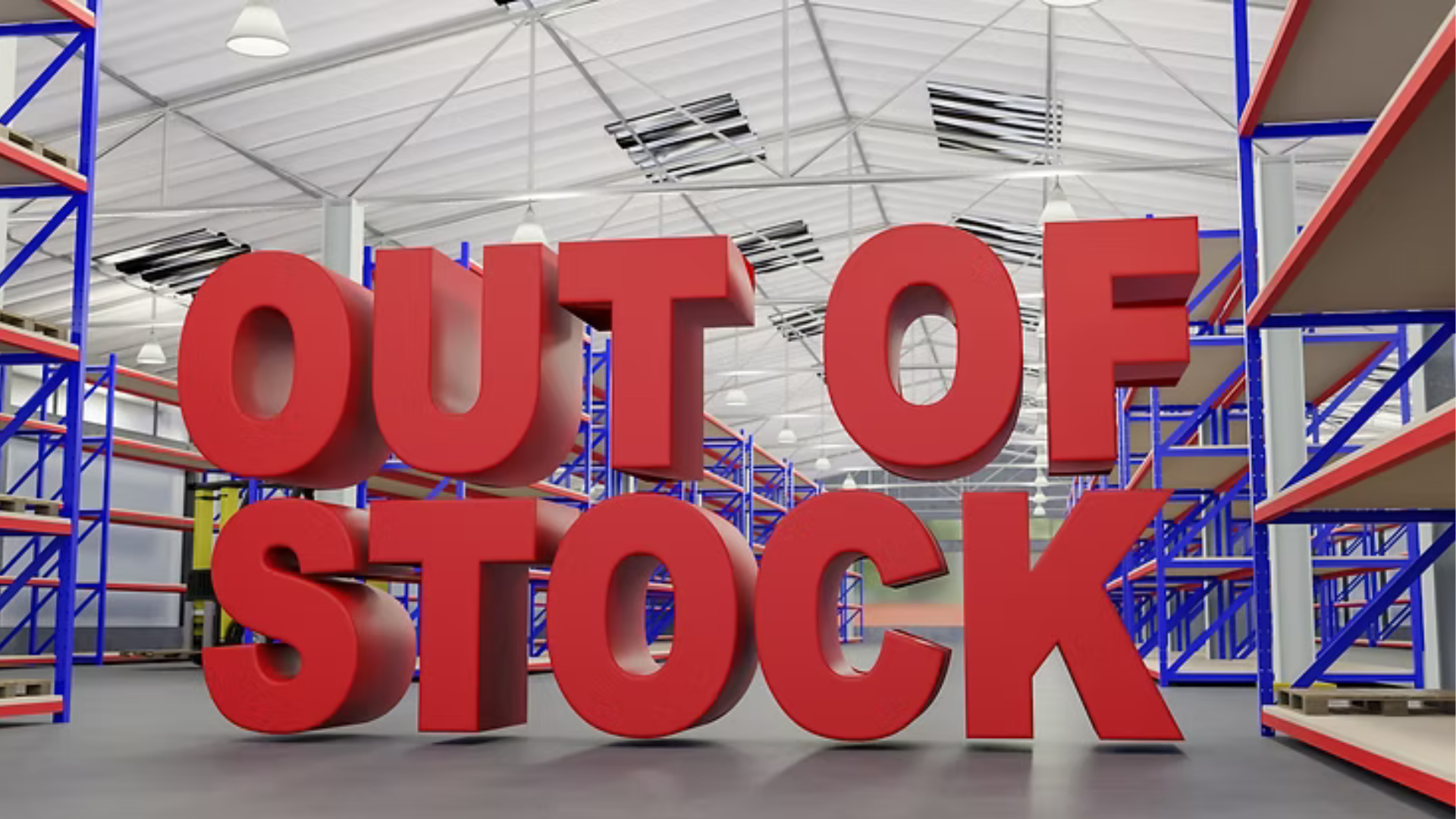
out of stock sign in a warehouse

The problem is systemic. Companies worry about shortages and err on the side of caution, ordering more than necessary to get inventory in the door. However, as demand softens, they end up with too much inventory and have to cut back and markdown existing inventory. 

So how can retailers address and get ahead of inventory management issues? In 2022, Walmart was caught with 32% more inventory year over year.

“It’s crazy. 8% would have been high, 15% would have been terrible, 32% is apocalyptic. I mean that’s billions of dollars of inventory. That’s just frankly not managed very well.” – Former Walmart President and CEO Bill Simon told CNBC

Introducing Inventory Control Desk, by 7thonline. Inventory Control Desk addresses the challenges retail executives are facing regarding managing inventory level liquidity and optimizing working capital, resulting in improved customer satisfaction and increased profits.

Developed in collaboration with industry-leading clients, Inventory Control Desk was designed. Inventory Control Desk affords visibility to plan and execute promotions, markdowns, transfers and closeouts—addressing growing inventory management problems for multichannel retailers grappling with lost sales. The application provides daily, weekly and monthly sales and inventory positions and generates sales forecasts and alerts for re-orders when inventory positions are at risk. 

For over 25 years, 7thonline has been helping the retail, wholesale and supply chain industries optimize demand planning and inventory management. Deployed as a cloud-native SaaS enterprise solution, 7thonline applications optimize merchandise planning and demand forecasting for clients such as Calvin Klein, Patagonia, Tommy Hilfiger, Michael Kors, Nautica, PVH and more.

Discover how 7thonline can help you minimize your inventory risk. Book a demo or email us at info@7thonline.com

Optimizing Product Distribution with New DTC Forecasting and Planning Solution

The latest in retail innovation: 7thonline introduces Test Buy, a game-changing direct-to-consumer (DTC) forecasting and planning solution—powered by 7thonline Lab’s machine learning (ML) and artificial intelligence (AI). The Test Buy module empowers retail professionals to make smart merchandising decisions by capturing the latest consumer trends and recommending inventory to specific retail locations. Analyze inventory demand to eliminate the need to commit to large initial buys, drive margins and optimize product distribution by strategically allocating inventory

business meeting analyzing forecasts

Developed in collaboration with a long-term client, Test Buy’s cutting-edge features effectively address inventory risk and enhance retail processes to advance inventory management at the style, color, size and door level. The module’s ability to forecast and recommend based on two data points (days/weeks) empowers retail decision-making teams to allocate inventory to brick-and-mortar locations with the highest propensity to sell at full price. Utilizing ML & AI, Test Buy extracts meaningful information and predicts consumer behaviors to improve the retail forecasting, planning and management process.

Industry analysts estimate that, on average, 60% of traditional initial buys are unproductive— resulting in missed sales targets, shrinking margins and forced markdowns. Test Buy mitigates risk by delivering visibility to productive and unproductive inventory situations, prompting smart decision making regarding overstock, stock outs, omnichannel allocation mismanagement and beyond. Retail and supply chain industries are undergoing a dramatic shift where industry leaders are placing more importance on data, data science and software to gain a competitive edge. One of 7thonline’s client partners has already seen a 35% increase in gross margins after implementing Test Buy recommendations.  

Fully integrated within our Open-to-Buy (OTB) module, the Test Buy dashboard provides necessary data that allows retailers to:

  • Evaluate initial test store effectiveness
  • Expand store count based on a sophisticated clustering algorithm 
  • Determine optimal quantity for the initial and expansion store locations
  • Calculate each location’s size profiles based on current trend 

7thonline’s continuous dedication to innovation and R&D brings the most cutting-edge, cloud-native solutions to life. The introduction of Test Buy continues to transform the way retailers and wholesalers are making merchandising decisions. The Test Buy module further enhances those processes to optimize inventory management at the style, color, size and door level; using AI and ML to forecast and recommend based on two data points (days / weeks) allows the retail decision making teams to allocate inventory to the locations with the highest probability to sell the product at full price. Spanning across all key channels—retail, wholesale and ecommerce—7thonline utilizes the power of integration to understand consumer demand, react to emerging trends and drive revenue and margin growth.

To learn more about our suite of cloud-native solutions, email us at info@7thonline.com or request a demo.